Chinchilla nutrition is basic and straightforward, they DO NOT need fresh vegetables added to their diet the way that rabbits and guinea pigs do. When chinchillas are fed unlimited amounts of fresh, high-quality pellets and a variety of hays, when they’re given treats very sparingly with an emphasis on what is healthier, when they’re supplemented with vitamin C and given calcium supplementing only when pregnant/ nursing or if they become calcium deficient, then this basic approach to diet and nutrition is, in our opinion which comes as a result of considerable experience and research, the best course of action to pursue optimum health.
Be advised that chinchillas are selective, or opportunistic, feeders. This means that in the wild, they eat whatever is appealing- new, different, tasty- and so their diet varies according to factors like season and availability. In the wild, their food choices are not loaded with fat, sugar or excessive amounts of protein but in captivity they are offered these things in the form of dietary extras, or treats, and this can lead to very serious health problems. Just because a chin likes it or will consume it does not necessarily mean that it’s good (or even safe) for him.
Always introduce any dietary change slowly and discontinue treats until the change is complete. When adding something to their diet only add one new thing at a time; for instance, let your chin’s digestive system adjust to a new type of hay or treat before introducing another. “Rich” foods, like certain hays (alfalfa, clover) or treats (dried fruit), are likely to cause digestive upset if too much is introduced too quickly, while the primary reason for introducing pellets slowly is to give the chin a chance to learn to like something new.
Whenever a chin has internal health issues (pneumonia, digestive, etc.) or dental disease (including malocclusion), it is important to stop all treats of a potentially hazardous (dried fruit with its concentrated sugar, nuts, seeds, etc.) nature until it is certain the chin has fully recovered.
Nutrition Articles
- Chinchilla Coprophagy (Cecotrophy): PetEducation (doc), Wikipedia
- Excellent information resource: NutritionData
- Micronutrients, Hay, Pellet Mix, Vitamin Mixture, Other Feeds: CA Chins
- Sugar content in fresh fruit (doc)
Nutrition In Captivity: Approximating The Wild Chinchilla Diet
This is, unfortunately, not an uncommon sight for those of us who do chinchilla rescue. We see it in the chins who come in with light-colored teeth, who are underweight and fur-chewed (malnutrition causes stress), or who are prone to seizures from calcium deficiency. Malnutrition is the eventual consequence of poor diet: if the chin was only provided with feed intended for other animals, like rats or gerbils, or if he was supplied with excessive amounts of (or exclusively fed) dietary extras such as nuts, seeds, fruits, grains, vegetables or cereals, then his health was seriously compromised.
Chinchillas are selective, or opportunistic, feeders that are easily tempted to overconsume treats although they will not overeat of their dietary staples of pellets and hay. Malnutrition can take weeks, even months to overcome, and the sooner a chin regains his full health, the better. Until his recovery is complete, all treats that are potential health hazards (yellow and red arrows) should be excluded from his diet and the focus should be on fresh, high-quality pellets, alfalfa as the primary hay, with the option of providing some additional protein, herbs, or vitamins/minerals in moderate amounts.
Wild Diet and Nutritional Requirements
To date, there have been no scientifically confirmed nutritional studies of chinchillas in captivity that would tell us what criteria constitute a nutritionally complete and balanced chinchilla diet. What we do have to go on is a knowledge of what chinchillas eat in the wild and the insight of veterinarians. From these sources, it has been deduced that chinchillas require a high-fiber, low protein diet, and the most nutritionally healthy diet in captivity consists of unlimited access to fresh, high-quality hay and pellets. Unlike rabbits and guinea pigs, chinchillas do not need fresh vegetables, it will in fact predispose them to bloat, which can be fatal.
Chinchillas will not overeat of their dietary staples of pellets and hay, only treats, which are not an essential dietary requirement and excessive amounts of fat, sugar, and protein will detrimentally affect health. Vitamin C supplementing is advisable for the dental benefits it provides, and chins actually regard chewable vitamin C tablets as “treats.” Due to the potential for parasites, chemicals, and contaminants, chinchillas should be given distilled or filtered water, not tap water.
Pregnant/nursing chins should always receive both vitamin C and calcium supplementing, their bodies are being depleted by the process of creating and nourishing new life. Supplementing calcium in particular at this critical time can prevent calcium deficiency and malocclusion from occurring in the mother or kits in the future.
Moderate amounts of additional protein and vitamins/minerals are recommended for pregnant/ nursing or poorly chins (underweight, malnourished, ailing), but kits should never be supplemented directly as that can be detrimental unless vet-advised.
The Nutrition of the Chinchilla as a Companion Animal-Basic Data, Influences and Dependences by P. Wolf , A. Schröder, A. Wenger and J. Kamphues
This contribution is meant to obtain basic data for feeding chinchillas (ingestion behaviour, feed and water intake) kept as companion animals. The chinchillas ingested more than 70% of their total feed intake during the dark phase (highest level of activity between 9:00 pm and 7:00 am). Daily amounts of feed intake varied between 2.5 (fresh grass) or 2.6 (hay) and 5.5 (pelleted complete diet) g of dry matter per 100 g of body weight.
An offered mixed feed based on native components led to a selection [example of selective feeding] of individual ingredients (high palatability: carob, beet pulp, sunflower seeds). The chinchillas’ daily water intake varied between 30 (mixed feed in briquette form) and 40 ml (alfalfa cubes) and amounted on average between 1.5 and 3 ml/g of dry matter. Compared with rabbits or guinea-pigs, the chinchillas generally showed noticeable differences (rhythm of feed intake, palatability of individual ingredients, capacity for digestion, etc.) which must be considered in order to optimize the nutrition of this species.
Studies of the wild chinchilla diet indicate that they are herbivores that require a high-fiber diet:
“Overall, fibers made up most (greater than 66%) of the diet in both years and in all seasons. These fibrous items are extremely difficult to identify and may correspond to highly lignified plant parts such as bark and woody stems of shrubs and of the succulent agave-like bromeliad Puya berteroniana.”
“Herbs and shrubs followed in importance in the chinchilla diet. Identified succulents made up only a small fraction of the chinchilla diet, and were eaten in a non-predictable way throughout the two years. The same was true for seeds, the least represented food category in the diet.”
by A. Cortés, E. Miranda, and J. E. Jimenez, “Seasonal food habits of the endangered long-tailed chinchilla (Chinchilla lanigera): the effect of precipitation“
“Free-ranging chinchillas survived on a diet of grasses, cactus fruit, leaves, and the bark of small shrubs and bushes. Captive chins need a diet high in fiber to prevent enteric problems. The basic chinchilla diet consists of a good quality grass hay (timothy) and a small amount of chinchilla pellets. Because the diet must be high in fiber, the sole feeding of pellets must be avoided.”
by Heidi L. Hoefer, DVM, DABVP, “A Clinical Approach to the chinchilla“
“By studying chinchillas in their natural environment, we know that they eagerly seek out berries, herbs and cactus fruits as well as high-fiber foods such as grasses and the bark of small shrubs and bushes. In order for nutrients to be extracted, this diet requires a large volume of food intake and prolonged chewing, both of which are important factors in maintaining the chinchilla’s gastrointestinal and dental health.”
by Peter G. Fisher, DVM, Pet Care Veterinary Hospital
Proper nutrition, which includes hay, can help prevent dental problems in domestic chinchillas:
“The chinchilla has evolved in arid mountain conditions where vegetation is fibrous and coarse, low in energy, and high in abrasive silicates. Captive chinchillas are often fed a processed diet of pellets, raisins, alfalfa [leaf, stalks are tough and require much chewing] and treats that require minimal chewing and are low in abrasive phytoliths. This low-roughage diet dramatically reduces tooth wear and is thought to be a major contributing factor in most of the dental abnormalities seen in chinchillas. Offering a diet high in “chew factor” like grass hay may help slow down the development of dental disease in chinchillas.”
by Thomas M. Donnelly, “Encephalitozoon cuniculi-Associated Phacoclastic Uveitis in the Rabbit: A Review“
“The chinchilla originates from an area of the Andes mountains where vegetation is tough and fibrous and low in energy content. As a result, a large amount of food is eaten and alot of chewing takes place. This results in the normal wear of the cheek teeth which are open rooted and grow continously to compensate for this wear.”
by Heidi L. Hoefer, DVM, DABVP, “A Clinical Approach to the chinchilla“
“Improper diets are responsible for many digestive disorders. The chinchilla requires a diet that is high in fibre, with moderate amounts of protein.”
by Richardson, “Diseases of Small Domestic Rodents”
“Chinchillas are herbivorous rodents with teeth that all grow continuously. In captivity they are commonly affected by dental disease. Since the range of dental disease occurring in wild chinchillas is unknown, the dentition of museum specimens originally obtained from the wild was assessed and compared with specimens prepared from captive bred animals. Skulls from wild-caught chinchillas showed minimal evidence of dental disease and the teeth were all short, cheek tooth lengths averaging 5.9 mm. Cheek tooth lengths in zoo specimens (average 6.6 mm), clinically normal (average 7.4 mm) and captive bred animals with dental disease (average 10 mm) were significantly elongated by comparison (p < 0.0001). Captive bred specimens showed a wide range of tooth related lesions.”
“These results suggest that some aspect of captivity is responsible for the development of dental disease in chinchillas. It is suggested that the diet (its physical form and composition) is the main etiological factor, and that provision of a diet closely matching that of wild chinchillas should significantly reduce the incidence of dental disease in captive chinchillas.”
by David A. Crossley and Maria del Mar Miguélez, “Skull size and cheek tooth lengths in wild and captive chinchilla populations“
Provide A Variety Of Hays!
Hay is the domestic chin’s substitute for the roughage they had in the wild, i.e., the “bark and woody stems of shrubs.” The contribution that hay makes to roughage and dietary fiber is essential for maintaining good GI tract health in chinchillas. It is absolutely vital that a chin never goes without his hay, and by providing a variety of hays you will encourage your chin’s interest in consuming it while supplying him with greater nutritional benefit.
Grinding and chewing course hay also keeps continuously growing teeth filed down, preventing molar spurs and other dental problems, like overgrowth and malocclusion. Although most chins aren’t extremely particular about the brand or distributor of hay as long as it is of high quality, if your chinchilla isn’t eating his hay you will need to switch to another brand or distributor until you find one that he prefers.
The dietary staples of fresh, high-quality pellets, hay, and distilled or filtered water should ALWAYS be available for consumption; chinchillas will not overeat of their dietary staples, only treats. Good quality hay will not look dullish brown and dead, it will both look and smell bright, clean, and dry as if it had just been cut and dried in the warm sunshine. It will be free of thorns, dampness, dustiness, mold, and musty odors.
Be aware that there will always be a little waste with hay and as chins are selective feeders they often go for the soft, leafier parts before the stalk. Therefore, it’s important to leave the stalk in for a day or two (as long as it’s still clean and fresh) to allow the chin the opportunity to finish consuming it. Of course, whatever hay becomes soiled or is clearly regarded by the chin as unfit for consumption should be cleared out and replaced with a new supply. Always keep edibles on the top level of the cage, where they are most likely to stay clean and clear of fecal droppings and urine.
A non-breeding pet chin’s primary hay, for daily use, should be high in fiber and low in protein, and grass hays in general (timothy, mountain grass, brome, orchard grass, etc.) fit that description. The basis for the old “high-fiber, low protein” hay guideline is that most pellets were and are still alfalfa-based, and so the logic went that since alfalfa (legume hay) is high-fiber, high protein hay, the pellets were already supplying sufficient protein for a non-breeding pet chin. Of course, if a chin is being fed a timothy-based pellet, then he should get alfalfa as his primary hay to ensure sufficient protein consumption.
But even when alfalfa pellets are fed, it is still VERY IMPORTANT to serve alfalfa hay occasionally (about 2-3 times a week) as part of a non-breeding pet chin’s hay variety, because alfalfa hay is ALSO high in calcium and this can help prevent calcium deficiency and environmental malocclusion.
In our opinion, after many years of seeing hundreds of chins from every type of situation and adoption source, we have to say that by far the healthiest chins that we’ve observed, in particular, those without calcium deficiency problems, have come from a background where alfalfa was served as the primary hay and where there were little to no dietary extras offered, especially those high in protein, fat, oils or phosphorus (e.g.- nuts, seeds, grains).
When alfalfa is served as primary hay for non-breeding pet chinchillas on an alfalfa-based pellet diet, it will NOT cause obesity (which is rare in chins but can happen if denied opportunities for exercise) as long as the chinchilla receives regular, vigorous exercise and he is not served dietary extras that are high in protein. It’s important to look at the diet as a whole rather than over-analyzing the parts when trying to achieve the “high-fiber, low protein” balance, and since alfalfa hay contains MANY beneficial vitamins and minerals (ref-wisegeek.com) in addition to being high in protein, it is better to serve more alfalfa hay and to restrict or eliminate those problematic dietary extras.
“Rich” hays, like alfalfa or clover, should be introduced slowly to avoid squashy fecal droppings. Chins who are pregnant/ nursing or poorly chins (underweight, malnourished, ailing) who can benefit from a moderate increase in protein and vitamins/ minerals, should be served alfalfa as primary hay.
Grain hays (oat, wheat, barley, etc.) can be fed occasionally but should NOT be served as primary hay, read the warning that goes with feeding grains. The articles and guaranteed analysis charts section provides additional information.
Sometimes a chin may have a slight sensitivity to hay, especially if he’s inhaled some small particles, in which case he may make the nose-clearing sound and wipe his nose. But be observant, as these symptoms can indicate the onset of pneumonia or other respiratory problems.
Regarding hay cubes and loose hay:
An interesting read about hay cubes and their benefits in this document, but be advised that this article was written for equestrians (horse owners) and the references to Esophageal choke and the dampening/softening of hay cubes addresses problems that horses have that are NOT transferable or applicable to chins. Chinchillas are not prone to Esophageal choke from eating pellets and hay cubes, and their hay cubes must be dry, the same as with loose hay.
Hay cubes are chopped and compressed hay, they typically come in timothy or alfalfa and both hay cubes and loose hay provide a chin with his necessary nutritional fiber. If your chinchilla is experiencing difficulty chewing due to dental problems, try crumbling hay from a hay cube into a bowl for him to eat from. Cubes are also ideal to put in a carrier when shipping, transporting, or traveling with your chin.
Loose hay requires more grinding from the molars (which is a good thing) because it isn’t chopped like the compressed hay in hay cubes. But the hay in hay cubes isn’t exactly minced and still requires some molar grinding, and in the area of incisor wear, there is definitely an advantage because the chin must pry flakes loose from the compacted cube.
Hay cubes are practically mess-free, especially with a wire bottom cage where any small, unconsumed bits easily fall through into the litter pan. Hay cubes have less dust than loose hay, making them less of an allergy irritant. There may appear to be less waste with hay cubes than with loose hay, but if allowed to choose between, most chins will prefer to eat the unprocessed loose hay and let their hay cube go to waste.
We have yet to see the perfect hay manger for loose hay, inevitably if a chin can pull hay out at all then he soon has most of it pulled out and scattered about his cage, necessitating more diligent cleanup by his chinparent. But that’s okay, because loose hay has some key advantages over hay cubes that make it worthwhile. As previously noted, chinchillas usually prefer the unprocessed loose hay when given a choice, and with loose hay there is also a greater selection of hay types to choose from. Providing a variety of hays can keep hay consumption at peak levels because the chin stays interested in eating his hay.
When storing loose hay or hay cubes, push the air out of the bag or container but DO leave it slightly vented for continued minimum air circulation. Hay has some inherent moisture and if kept in an air-tight or tightly sealed container it can mold. Place the container in a dry, cool place with no exposure to dampness, direct sunlight, or potential contamination of any kind.
Additional Articles and Guaranteed Analysis Charts
- Alfalfa hay, forage quality terms and definitions (pdf)
- Haying FAQ Sheep’s Creek Farm
- Nutritional Value of Hay hobbyfarms.com
- Guaranteed analysis for loose hay: American Pet Diner, Oxbow
- Guaranteed analysis for hay cubes: drsfostersmith.com
- Charts with nutritional content, including calcium, in hay: several articles (doc), guinealynx.com (doc)
- CA Chins: What to Look for in Hay, How To Choose GOOD Hay (pdf), Making Hay While the Sun Doesn’t Shine (Additives Used To Preserve Hay) (pdf), Grass Is Always Green, But Your Hay Might Not Be (pdf)
Pellets, A Dietary Staple Of Domestic Chinchillas
Chinchillas normally consume about 2 tablespoons of pellets a day but this does not mean that pellets should be rationed or limited! The dietary staples of fresh, high quality pellets, hay and distilled or filtered water should ALWAYS be available for consumption; chinchillas will not overeat of their dietary staples, only treats. This is not to suggest that a chin should be given an overfilled pellet bowl that is allowed to sit exposed for days, vulnerable to soiling or spilling before it is consumed. A chin’s daily pellet supply should be both adequate in amount, determined by his personal consumption, and fresh.
There has been the suggestion that pellets should be rationed in order to compel the chin to eat more hay, the reasoning behind this is that there would be greater benefit to digestive and dental health if the chin consumed more roughage than pelleted “soft food.” But that reasoning doesn’t take into account the nutritional aspect, the contribution that pellets make to providing needed vitamins, minerals (like calcium, to help prevent environmental malocclusion) and protein. Also, when both pellets and hay are offered in unlimited quantities, chinchillas typically show a stronger preference for hay anyway, provided that the hay is appealing in its quality and freshness, and especially when a variety is offered in order to maintain interest and supply greater nutritional benefit.
Although there have been no nutritional studies conducted on chinchillas in captivity to date to determine what the chinchilla’s definite nutritional requirements are (pellets today seem to have simply evolved from rancher trial-and-error), what we do know for certain from understanding the chinchilla’s diet in the wild is that chinchilla pellets need to be high in fiber to meet their nutritional and digestive needs (hay also makes a vital contribution to dietary fiber). Fiber should be the highest nutritional percentage, at least 16%, preferably 18% or higher (that number was provided by two exotics specialist vets). Protein should be the second nutritional percentage and slightly less than the fiber content. Most pellets are alfalfa-based and vitamin/mineral content varies across brands.
Pellet brands with a nutritional percentage of less than 16% fiber are insufficient. The protein content of 20% or higher can be too rich for some non-breeding chins and may result in squashy fecal droppings. Animal ingredients or by-products should never be present in the ingredients listing because chinchillas are strictly vegetarian.
Regarding whether rabbit pellets are safe and acceptable for chins or not…
This of course depends on the particular brand of rabbit pellet and what its ingredients and guaranteed analysis are. Because those variables are subject to change, the chinparent should always check with the manufacturer’s site, first. If the rabbit pellet’s ingredients are the same as those found in quality chinchilla pellets, and if the guaranteed analysis approximates that of quality chinchilla pellets (e.g., high in fiber, lower in protein), then that rabbit pellet brand should be considered acceptable for chins. Brands like Pen Pal’s Professional Rabbit 16 and Manna Pro’s Select Series Sho Formula are acceptable for use with chins.
In the past, the widespread warning against feeding rabbit pellets to chins centered around the concern that there were hormones added to the pellets of rabbits raised for meat production. We were told when we inquired on Chins-n-Quills, a major chinchilla forum that is now defunct, that this practice had been discontinued in the 1980s, and a USDA Food Safety and Inspection Service page that was last updated in 2006 when we referenced it in 2008, appeared to verify that: “Are Hormones and Antibiotics Used in Rabbit Raising? Antibiotics may be given to prevent or treat diseases in rabbits. A “withdrawal” period is required from the time antibiotics are administered until it is legal to slaughter the animal. This allows time for residues to exit the animal’s system. FSIS randomly samples rabbits at slaughter and tests for antibiotic residues. No hormones are used in rabbit raising.” Although hormones in rabbit pellets may no longer be an issue in the U.S., caution is still advised for anyone outside of the U.S. who may be considering using rabbit pellets with chins.
Pellets manufactured and intended for other species (birds, gerbils, etc.) are definitely NOT nutritionally suitable for chinchillas; liver disease and malnutrition can result from feeding inappropriate diets. Feeding pellet mixes with “treat” bits in them as a daily diet is also very ill-advised. Chinchillas are selective, or opportunistic, feeders and this means that they will either dig out or pick through the mix in pursuit of the tastier (not necessarily the most nutritious) morsels. This results in a poor diet that can lead to malnutrition, and some of the ingredients in pellet mixes are capable of causing digestive distress or bloat, especially when fed in substantial amounts or over time. However, pellet mixes can be periodically offered in a separate bowl as a treat.
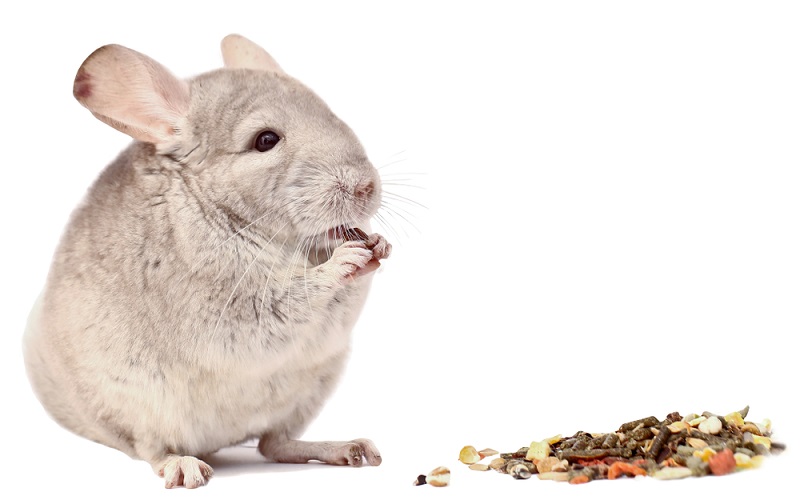
Chinchillas eat and gnaw by grasping and positioning the item with their front paws, which they use much the same way people use their hands. Always keep edibles on the top level of the cage, where they are most likely to stay clean and clear of fecal droppings and urine. Pellets should be offered in a clean bowl made of non-hazardous material such as stainless steel or ceramic. Plastic bowls or J-Type feeders can be lethal!
Store pellets properly to prevent rapid decay, mold, or contamination:
Pellets should be stored in a sealed container in a dry, cool place with no exposure to dampness, direct sunlight, or potential contamination of any kind, for example, out of the reach of children or other household pets, away from household chemicals, etc. Bear in mind that without refrigeration, pellets will lose their nutritional value more quickly and should be entirely consumed by the expiration date or within about a month from the date of purchase. Cold food, contrary to rare myth, does not cause “fits.” When storing pellets in a dry, cool place instead of refrigerating, it would be wise to purchase fresh pellets in small amounts each time to ensure that they’re consumed while their nutritional value is at its peak.
To make your chin’s pellets more appetizing, dust them with rose hips powder. When offering fresh pellets in the evening, just put some rose hips powder on top and mix the powder and pellets together right in the chin’s bowl (be sure you’ve washed and dried your hands well, first). Rosehips powder is available at health food stores and from suppliers that stock herbs, such as Mountain Rose Herbs. This adds a sweet taste to their pellets that chins just love, without adding sugar to their diet. Rose hips are high in vitamin C, and it is strongly recommended that chins get additional vitamin C (they can’t get “too much” vitamin C and excess is eliminated, not stored) in their diet because it helps prevent dental disease by strengthening the connective tissue which holds the chin’s open-rooted teeth in place.
When changing pellet brands do so gradually, mixing in some of the previous feed (pellets) in decreasing amounts over the course of about a week. A slow change will help the chin’s digestive system adjust, but since pellets aren’t really rich food, the primary reason for introducing them slowly is to give the chin a chance to learn to like something new. Always discontinue treats when introducing a dietary change, you can resume when the changeover is complete.
If you are transferring the chin from a bad diet to a good one the change is absolutely necessary and you must see to it that the changeover successfully takes place. Be aware that a chin’s initial reaction to change or the unfamiliar is typically one of reluctance or distrust. This is often mistakenly perceived as the chin rejecting the new in preference of the old, but the initial reaction is not a gauge of the chin’s likes and dislikes as much as it is a demonstration of the fact that chins simply need time to adjust to something different. So don’t be surprised if your chin initially refuses to eat the new pellet or selectively eats only his previous pellets during the initial phase of the changeover, this is a common reaction.
Once the changeover is complete if the chin is still not eating the new pellets leave only the new pellets in his dish and once he realizes that you will not tempt him with treats or return the old pellets he WILL start eating the new pellets within a day or two, watch and allow him to do so in his own time. He will NOT “starve himself” or go into GI stasis in the meantime, a chin that is physically capable of eating will do so when he’s ready. Chinchillas can safely go up to 24 hours without food (this is vet verifiable; a state of extreme stress either mentally or physically can put a chin temporarily off his food) barring other complications, but the dietary staples of fresh, high-quality pellets, hay, and distilled or filtered water should ALWAYS be available for consumption; chinchillas will not overeat of their dietary staples, only treats. If your chinchilla refuses to eat for ANY reason for more than a day, take him to your exotics specialist vet for a thorough examination.
Pellet Brand Analysis
Because we’re often asked, our opinion is that the top U.S. pellets are Oxbow Chinchilla Deluxe and Kline Diet. Criteria for judging pellet value and the type of pellets to strictly avoid (pellet mixes, pellets made for other animals, etc.) are discussed in the previous section.
NOTE: The manufacturer’s online information may be more up-to-date than what the sites below report, also, check product ingredients/ analysis from time to time because they ARE subject to change!
UK Pellet Brands:
Charnwood, Science Selective Chinchilla, Beaphar Care+, Henry Bell, Argo, Duggins, Harrison’s, Pets At Home (Made By Henry Bell & Co (Grantham) Ltd.)
U.S. Pellet Brands:
Kaytee Fiesta Chinchilla, Vitakraft Vita Special, Americal Pet, Timothy Pellets, Kaytee Forti-Diet, Rancher’s Choice, Sunseed Vita Chinchilla, Charlie Chinchilla, Manna Pro, Oxbow Chinchilla Deluxe, Kaytee Timothy Complete, Mazuri
Treats vs. Health Hazards
Remember that your chin’s dietary staples, the only consumables he really needs, are: unlimited access to fresh, high-quality pellets, hay, and distilled or filtered water, nothing more. Chinchillas won’t overconsume their dietary staples, but they WILL overconsume treats.
From our and others’ years of rescue experience and observation, chinchillas DO NOT gain weight when grains or excess fat and sugar are added to their diet. Chins are not like people, chinnie “junk food” (nuts, seeds, grains, dried fruit, etc.) doesn’t fatten them up, instead, it just leads to serious health damage over time. In fact, weight LOSS can result from overindulging a chin in treats. Because chinchillas are selective, or opportunistic, feeders they may hold out in hopes of getting treats to the point where their consumption of dietary staples drops, leading to weight loss and even fur biting from the stress of malnutrition.
Excessive protein will cause weight gain, but at the expense of overworking and potentially damaging the liver.
The chinchilla GI tract is made to handle the sparse, fibrous plant material found in the chinchilla’s native environment, it’s not equipped for foods rich in fat, sugar, or that contain excessive amounts of protein.
Never free-feed your chin treats, especially sugary or fatty treats, over time this will cause health problems that can lead to premature death. Unless treat intake is strictly monitored it can cause: diarrhea, severe digestive distress, seizures, bloat, malnutrition, liver damage (Hepatic Lipidosis), pancreatitis, tooth decay, malocclusion (a soft food diet does not provide sufficient tooth wear and some treats that are high in phosphorus can contribute to calcium deficiency and environmental malocclusion) and the following:
“Diets high in sugars or protein or low in fiber may cause changes in the fermentation process in the cecum, leading to changes in pH and motility, which in turn lead to enteritis.”
(ref- All Creatures Animal Hospital)
“Predisposing factors [for Lower Gastrointestinal Disease] include abrupt diet change, inappropriate antibiotic use, overcrowding and stress, and diets too low in fiber, and too high in fat and protein.”
(ref- Heidi L. Hoefer, DVM, DABVP)
Chinchilla stomachs are VERY small, what seems like a small amount to us (especially when they beg… “just one more!”) is actually a LOT for them and the more treats they consume, the less room they have for the dietary staples their body requires for vitality and good health. Chinchillas are notorious beggars and they will EAGERLY overeat treats to the point of making themselves sick or inducing the health problems stated above, so it’s up to the caring chinparent to show willpower and restraint in the best interests of their pet’s health and longevity. Just look in the mirror and say to yourself, slowly, “I am not a treat dispenser, I am not …”
Your pet chinchilla expects you, the dominant species in his environment, to set expectations, and if you give your chin a treat whenever he begs, then YOU are conditioning him to continually beg, and he will beg whenever he sees you, right on cue. Chins don’t HAVE to get a treat every time they beg, and in fact, a chin may actually be begging for another reason, because his water bottle isn’t working, because he’s low on food, because he’s bored and wants attention and chin scratches or out-of-cage playtime, etc. It’s especially important to make sure that the chin doesn’t need anything supplied or fixed before reaching for his treats.
There are healthier alternatives to feeding treats when a chin begs! Try offering something else, like exercise, attention, or a new chew toy (like a piece of a cholla or a fresh willow stick), and the constant begging will subside if you’re firm about making him settle for the alternative instead.
Be aware that chins’ eyes are on the sides of their head and this is why they sometimes accidentally nip or have trouble finding a treat when it is held directly in front of them, because then they are relying heavily on their sense of smell. When a chinparent has picked up the treat with the same hand that they’re offering it to the chin with, the whole hand may smell of the treat, making it more difficult for the chin to aim correctly.
Chinchillas will also consume things (with great enthusiasm!) that are clearly not safe or good for them at all (potato chips, lead paint, etc.), so just because your chin is begging for or shows interest in eating something (perhaps something that you’re eating), does not mean that he knows what’s best for himself and that he should be allowed to try it! Wild animals can trust their instincts when they’re in the wild, they know what to eat and what not to eat in their natural habitat, but this does not transfer to their lifestyle in captivity. It’s a common myth that pets will instinctually “know” if they should have something or not when in fact, they won’t.
If a chinchilla has not been exposed to treats or a certain kind of treat when young, he may not recognize something as a treat when it is offered to him later on. For instance, a chinchilla that’s never seen a raisin before may bark when offered one, in response to the raisin’s relatively pungent (and unfamiliar) smell.
Always keep edibles on the top level of the cage, where they are most likely to stay clean and clear of fecal droppings and urine. Many treats (dried fruits such as raisins, nuts, seeds, etc.) require refrigeration to preserve their optimum freshness and value and to prevent rapid decay or mold. Cold food, contrary to rare myth, does not cause fits. If the treatment can be stored without refrigeration, be sure that it is stored in a dry, cool place with no exposure to dampness, direct sunlight, or potential contamination of any kind.
Treats vs. Health Hazards: A Guide to Dietary Extras
Chinchillas are curious and will attempt to explore their environment by taste, you MUST supervise what they come into contact with and could potentially gnaw or consume. Also see: Chewing Hazards, Human Foods that Poison Pets and AVMA Guide to Poisons.
Please read the previous section, Treats vs. Health Hazards, as it has a direct bearing on this one. As stated earlier: Be advised that chinchillas are selective, or opportunistic, feeders. This means that in the wild, they eat whatever is appealing- new, different, tasty- and so their diet varies according to factors like season and availability. In the wild, their food choices are not loaded with fat, sugar or excessive amounts of protein but in captivity they are offered these things in the form of dietary extras, or treats, and this can lead to very serious health problems. Just because a chin likes it or will consume it does not necessarily mean that it’s good (or even safe) for him.
Although amounts are given in the treat descriptions below, it must be understood that a chin should receive ONLY ONE TYPE OF TREAT PER DAY, not one of each type. Small chins should receive a smaller portion or get treats less frequently and kits in the 8-10 week weaning period should not be fed treats at all. Remember: NO TREATS for chins that are ill or that have diarrhea or squashy fecal droppings, they need all the dietary staples (fresh pellets, hay) they are able to consume and treats can exacerbate their condition.
Note: This is a brief, basic guide, it is not all-inclusive.
The safest and most beneficial:
1. Herbs
Herbs can be offered in amounts of about 1-2 teaspoons, 3-4 times a week. Rose hips, in particular, are a good treat to offer because they are high in vitamin C and that helps prevent dental disease by strengthening the connective tissue which holds the chin’s open-rooted teeth in place.
Herb suppliers for the pet market typically base their product’s conditions of use on knowledge of the herbs’ warnings and side effects in animals and man. We strongly recommend researching an herb before introducing it to your chin, to determine things like whether the product is good for long term use or use with pregnant/nursing chins.
2. Vitamins and minerals
EVERY chin should receive additional vitamin C because it strengthens the connective tissue around their open-rooted teeth, and chewable vitamin C tablets every other day can be served as a treat. Chins that are calcium deficient or pregnant/ nursing should have access to additional calcium in the form of more alfalfa hay, which is high in calcium, or additional calcium from sources such as calcium chews. When pregnant/ nursing chins are supplemented with calcium, it helps prevent calcium deficiency and malocclusion from occurring in the mother or kits in the future.
Vitamin and mineral pellets (Calf Manna, Total Enhancer, Animax) should be limited to ½ teaspoon of pellets given 3-4 times a week at most on a temporary basis, do not overfeed, these are high in protein and excessive protein can cause liver disease.
Our exotics specialist vet advises only occasional access (1-2 times a week) to mineral wheels, stones, or blocks (attach to the cage with wire, not plastic). When supplementing a chin in need of extra vitamins/ minerals, such as pregnant/ nursing or poorly chins (underweight, malnourished, ailing), always check hay and pellet analysis first to see what they’re already getting, don’t overdo it.
May be safe and beneficial IF precautions are observed:
1. Cereals or uncooked pasta
DO NOT give your chin sugar or honey-coated cereals at all. Honey can cause gas and lead to bloat, which can be fatal. Many kinds of cereal that are not coated in sugar nonetheless contain too much sugar and this can cause blood sugar-related seizures. Human-grade cereals (unsweetened Shredded Wheat biscuits, puffed cereals like Kashi 7 Whole Grain Puffs) that are not coated in and that don’t contain much sugar still need to be limited to one SMALL piece 2-3 times a week, at most. Uncooked pasta adds unnecessary starch and carbohydrates to the chin’s diet but can be given in very SMALL pieces a couple of times a week. Read the warning that goes with feeding grains!
2. Chinchilla treat or pellet mixes
Mixes that contain treat bits and dried fruit, vegetables, nuts or seeds should be avoided except as an occasional treat, 1 teaspoon 1-2 times a week at most offered in a separate dish. Feeding pellet mixes with “treat” bits in them as a daily diet is very ill-advised.
3. Fruit
Note that although the wood of some trees may be toxic, that warning doesn’t necessarily transfer to the fruit of the tree. Fresh (banana, apple, grape, strawberry, etc.) or dried (apricot, cranberry, cherry, peach, raisin, prune, fig, etc.) fruit can be given in SMALL pieces, 2-3 times a week at most.
Fruit, either fresh or dried, is not recommended for daily consumption due to its high sugar content. A diet high in sugar can cause diabetes, tooth decay, and other problems, including blood sugar-related seizures when sugary treats are fed around playtime (an hour before or after). See this document to compare sugar content in fresh fruit.
About dried fruit:
“Vitamin C is one nutrient that is destroyed by heat. Pretreating food with citrus juice can help increase the vitamin C content of the dried food.” (ref- cdc.gov) The sugar content of a piece of fruit becomes condensed into a smaller area when the fruit is dried so that a chin that consumes an entire raisin is getting twice as much sugar as one who consumes half a grape. Never give a chin dried fruit that has been sweetened, that contains ADDED sugar, cranberries for instance often do. See these sited for dried fruit nutritional analyses: dietbites.com, nutritiondata.com, wholefoodsmarket.com.
“The more common reason that dried fruits will usually have more calories and sugar is that the dehydration process removes so much of the water normally found in the fruit. That missing water would normally make the fresh fruit larger than the dried fruit, so there would be more pieces of dried fruit in the same serving size. For example, one grape has seven calories and one raisin has seven calories, however, one cup of grapes has about 60 calories, and a cup of raisins has over 400 calories. This doesn’t happen because the raisin company added sugar, it happened because, without the water, the raisins take up a lot less space. More raisins fit into one cup so that means one cup of raisins has more sugar and calories than grapes. The sugar listed on the nutrient facts label on dried fruit packages is not table sugar unless it is listed as an added sugar. The sugar in dried fruit is fructose and glucose, the sugars that are naturally found in the fruit. Make sure to read labels before you buy the dried fruits, the ingredient list on the package will state whether sugar is added or not.” (ref- nutrition.about.com)
4. Grains
Grains (items consisting of or composed mostly of some type of grain or grains- barley, wheat germ, bran, oats, wheat, etc.) or a “supplemental” grains mix can be offered in moderate amounts of about 1 teaspoon, 2-3 times a week. -OR- Unsweetened mini Shredded Wheat biscuits should be offered in HALVES, a half of a biscuit 2-3 times a week, at most. -OR- Grain hays (oat, wheat, barley, etc.) can be offered occasionally, once a week at the very most.
Feeding grains WILL NOT ASSIST WITH WEIGHT GAIN, this seems to be a common misconception. Be cautious about some grains mixes, they may contain ingredients (nuts, seeds) that should be fed very sparingly, if at all. When serving soft grains (oats, wheat germ, wheat or barley flakes, etc.), it is important to ensure that there is enough fibrous roughage in the chin’s diet (unlimited hay) because pellets are also “soft food” and it takes sufficient roughage to keep everything moving along the chin’s GI tract.
- Be advised when serving grains that they are very high in phosphorus and a diet that is too high in phosphorus (or too low in calcium) will lead to calcium deficiency; this is a scientifically established fact for both animals and man. Because calcium deficiency is a cause of environmental malocclusion, grains (grain hays, supplemental grain mixes, grain treats, cereal or uncooked pasta, etc.) must be offered in strict moderation, IF AT ALL.
Read more about calcium deficiency and the relationship between calcium and phosphorus. Also, note that chins are not predisposed to bladder stones from calcium, that is a problem with rabbits and guinea pigs because those particular species have an atypical calcium metabolism.
- To avoid malocclusion caused by calcium deficiency, chins that are fed ANY grains, especially in a significant quantity (e.g., a chin that gets half an unsweetened mini Shredded Wheat biscuit 3 times a week, or a chin that is fed multiple types of grains, like a grains mix and then grain hay in the same week), MUST receive more alfalfa hay, which is high in calcium, or additional calcium from sources such as calcium chews, or the chin should simply receive less grain in his diet (or none at all, as grains are not a dietary staple).
- The reason that ranchers and pet breeders have used supplemental grain mixes for years without noticing a problem is that they ALSO typically give their breeding stock a calcium supplement or feed alfalfa as their primary hay. Since the trend in recent years has been to steer pet owners away from alfalfa and toward feeding only grass hays (which may have less protein but which don’t have alfalfa’s high calcium content), those pet chins are more vulnerable to calcium deficiency because not only are they getting less calcium in their diet, they’re getting raised phosphorus levels by being fed grains, further predisposing them to calcium deficiency (and malocclusion!).
5. Vegetables of “greens”
With the exception of a SMALL piece of fresh carrot that can be fed 2-3 times a week, NEVER feed a chin FRESH vegetables because that will predispose him to bloat and bloat can be fatal. Chinchillas are not like rabbits and guinea pigs in this way, they do not need fresh vegetables in their diet, pellets and hay are the only dietary staples they need.
It is important to bear in mind that what chinchillas eat in the wild is not equatable with the fresh vegetables you find in the supermarket, they differ significantly by factors such as fibrous consistency and nutritional and water content. Feeding chins fresh vegetables in captivity is not a way of approximating the native diet.
It would be wise to avoid the major bloat-inducing veggies (think green veggies in particular) whether they are in fresh or dried form: peas, cabbage, corn, lettuce, broccoli, and spinach. However, it is true that when vegetables are dried or processed that their bloat-causing potential does diminish. Other dried vegetables, such as pumpkin, potato, squash, and sweet potato are acceptable if offered in SMALL pieces 2-3 times a week.
Side note: If you live in the UK, pellets there are often high in protein and lower in fiber, the reverse of what chinchilla pellets should be according to vets. If a chin isn’t consuming large amounts of hay to compensate for that lack of fiber and to provide roughage for sufficient tooth wear, then dental disease, including tooth overgrowth, can result. Ideally, as long as a chin is able to consume hay, then finding the right quality of hay that he will eat regularly should be regarded as the better alternative.
Not safe, may be lethal or at least a bad health risk:
1. Anything Containing Animal Ingredients Or By-products
Chinchillas are strictly vegetarian and they should not be given anything that contains animal ingredients/ by-products.
2. Chocolate
NEVER let your chin have chocolate or anything containing chocolate, it is very dangerous for animals in general and can cause damage to both the digestive and nervous systems. (ref- snopes.com)
3. Corn
Except as a binder in feed, corn is prone to mold and fungus in the manufacturing & storing process, not to mention being a contributor to bloat. Pieces of corn should be removed if present in a pellet mix given as an occasional treat.
4. Nuts and seeds
Ideally, chins should not have nuts and seeds AT ALL, it’s an invitation to disaster because they are too high in protein, fat, and oils that can accumulate and lead to liver damage (Hepatic Lipidosis) or pancreatitis. Nuts and seeds are also high in phosphorus (doc), and a diet that is too high in phosphorus will lead to calcium deficiency, which is a cause of environmental malocclusion.
Coconuts are seeds, not fruit (ref), and coconut meat, the white insides that lay beneath the brown outer husk, is very high in saturated fat (nutritiondata.com and ref, .pdf).
IF fed, nuts, and seeds MUST be limited to a rare SMALL piece, once a week at the very most. Note that although the wood of some trees may be toxic, that warning doesn’t necessarily transfer to the nuts of the tree. Offering nuts and seeds is not a way to offer a more “natural” diet, the nuts and seeds found in the supermarket are not equatable with what chinchillas eat in the wild.
5. Protein, in excessive amounts
Excessive protein, such as that contained in nuts and seeds, can cause liver disease. Although alfalfa hay is high in protein, it plays an important part in a chin’s diet because it is very nutrient-rich and high in calcium, which can help prevent malocclusion caused by calcium deficiency. Read the details that put things into a proper perspective. Also see “vitamin and mineral pellets (Calf Manna, Total Enhancer, Animax)” under Vitamins and Minerals.
Why Distilled Or Filtered Water Is Best
NEVER use a water bowl, the contamination and spill potential in a chinchilla’s cage is too great for that, instead, use a water bottle and keep it out of direct sunlight. In fact, the chin’s cage should be positioned out of direct sunlight, anyway. The water bottle must be thoroughly cleaned at least once weekly, and it should be refilled daily with cold, distilled, or filtered water. Position the bottle on the bottom level of the cage (but not in a pee corner) so that any drips will go straight into the litter pan.
Cleaning the water bottle by dishwasher is highly recommended as this tends to do the most thorough sanitizing job. However, it is important that any other items that will go through the dishwasher cycle with the water bottle are clear of food particles, otherwise these particles can get trapped in the water bottle spout and cause an obstruction.
It is important to keep a backup water bottle on hand because ANY water bottle design (Water Buddy, Oasis, etc.) can potentially fail at the spout or drinking end, curtailing your chin’s access to water. Check the water level daily during water bottle refill time and if the water level has not changed from the day before, then check the spout to see if it is working correctly. If not, give your chin his backup water bottle immediately while you put the malfunctioning bottle through a dishwasher cycle. Test it afterward, if the problem hasn’t cleared the chin will need another water bottle to replace that one. If you have two chins in a cage and the water bottle had failed and left them without water, they’ll compete for water when they get it and this can cause cagemate conflicts. It’s best to have two backup water bottles in this case so that they can quench their thirst without a problem until their regular water bottle (or a replacement) has been returned.
If a water bottle empties too quickly the spout may be leaking or the chin may have chewed at the bottle and made a hole. It is not “typical” for a chin to chew at his water bottle! If he is, this could be a sign that the water bottle is not working reliably, that it is out of the water, or that the chin is stressed and anxious or simply bored out of his mind. Chinchillas are highly intelligent animals, they need distractions to keep them occupied such as a LARGE cage to accomodate running and playing, a variety of chew toys, at least one hideaway per chin, and a cage wheel to help decrease stress and boredom inside the cage; TV during waking hours provides environmental stimulation when the chin isn’t actively engaged in out-of-cage exercise and interaction.
If you start adding liquid vitamins to your chin’s distilled or filtered water, or when you initially switch to distilled or filtered water, it may take him a bit of time to adjust because he can tell there’s “something different” and it’s very typical for chins to be initially suspicious of change or the unfamiliar. Chins CAN safely go up to 24 hours without water (this is vet verifiable; a state of extreme stress either mentally or physically can put a chin temporarily off his food or water) barring other complications, but if at the end of that time he is still reluctant to drink, entice him by adding some cranberry juice or flavored Pedialyte to the water, up to about 20% of the water bottle’s contents. He should start drinking within 24 hours of the change but if he doesn’t, give him a bottle of what he’s accustomed to and see if he uses that. If not, then there’s something else wrong and he should be taken to your exotics specialist vet as soon as possible. A chin that hiccups, and perhaps paws at his face a bit while in the process of drinking has just taken in too much and, as with people, will be ok if allowed a moment to regain his composure.
The business priorities on a pelting ranch (minimize cost and effort, maximize personal gain) may have led to this statement on the MCBA website, “DO NOT USE distilled water on your animals. The nutrients which have been removed are important in maintaining a healthy animal.” But in reality, ordinary tap water is NOT enriched with “nutrients,” it’s only cheap and easy to provide. If trace minerals are what was intended by that quote, this does have some relevance, “the mineral content of water reflects the nature of the geologic formation with which the water has been in contact. The most abundant minerals dissolved in water are salts of calcium, magnesium, strontium, ferrous iron, and manganese.” (ref– Mad Sci Network)
However, “Whether the minerals in water are beneficial or useless has been an ongoing debate. All of our minerals are derived from our food: fresh fruits, vegetables, meat, poultry, grains, nuts, and dairy products. The minerals in water are so scant that in Boston, MA, for example, one would have to drink 676 8-ounce glasses of tap water to obtain the Recommended Daily Allowance ( RDA) of calcium. That person would have to drink 1,848 8-ounce glasses to get RDA of magnesium, 848 8-ounce glasses to get RDA of iron, and 168,960 8-ounce glasses to obtain the RDA of phosphorus.” -and- “Over 95% of our minerals come from our food and less than 5% from drinking water. You would practically have to drown yourself by drinking it to get the RDA of any beneficial minerals.” (ref– durastill.com)
Any tiny advantage gained from the trace minerals in ordinary tap water is eclipsed by the serious and potentially dangerous problems associated with it:
- Chlorination
“Chlorine has been the most widely used disinfectant in the U.S. for over 60 years (1) and is the primary disinfectant for drinking water in the world.” (ref– extoxnet.orst.edu)
- Fluoridation
Common to U.S. city water systems, the debate on whether fluoride is potentially harmful rages on. Well water may not have fluoridation but it does have a greater risk of parasites, read below.
- Routine contaminants: chemical pollution, lead, pesticides, etc., also true for well water –cdc.gov
Be aware that older homes may have lead pipes, and water that runs through them should not be consumed.
- Outbreaks: E. coli, Cryptosporidium parasite, Giardia
If you want to supplement your chin’s diet with additional minerals, you can do so without jeopardizing his health! We need to provide our chins with the purest AND safest water, and if mineral supplementation is desired in addition to what chinchilla pellets already provide, it can be obtained from suppliers who offer clean safe sources.
“Water is, of course, a fundamental necessity for the domestic chinchilla. Although city drinking water is adequate for chinchillas, excessive chlorine can be very dangerous. If the tap water has a strong disinfectant smell… filtered water should be offered. Water from natural sources is preferable to chlorinated drinking water.” (ref- petcarevabeach.com)
“Freshwater should always be available. Tap water in most large cities should probably be boiled because of the chlorine content.” (ref– New Hope Animal Hospital)
The problems- chlorination, contaminants, parasites, etc.- with tap water are magnified, more intense, and detrimental for a chinchilla than for an average healthy person; chins are more vulnerable just as people with weakened immune systems are. Bottled water doesn’t necessarily guarantee safety and purity any better than tap water, but distilled water and filtered water do.
It’s true that distillation and some filters remove the tap water’s trace minerals, but the negligible amount of minerals in tap water simply doesn’t justify the health risks. “Among the debate about distilled water, you will find some arguments against it. During the distillation process, bacteria are removed from the water, but so are the minerals. The debate centers around the benefits of minerals in the water, if the small amounts make a difference or not. This leads to the myth that distilling water leeches minerals from your body, when in fact people misunderstand the way distillation of waterworks within the body. It actually works by aiding the blood and lymph systems to carry any unused minerals in the body to the elimination systems. Part of the way all-natural waterworks in the system is to wash out impurities and any substances that the body doesn’t need.” (quote– water-purification-filters.com, ref– Life Extension forum)