Grooming Chinchillas
“Chinchilla dust serves the important purpose of allowing your chinchilla to stay clean in a way similar to how it would maintain its coat naturally. In its native cold, arid environment, the chinchilla would roll in fine volcanic ash to stay clean. Chinchilla dust, like volcanic ash, sticks to oils and dirt in the coat, and then falls off, cleaning the chinchilla’s fur as it does so.”
Chinchillas secrete oil from their skin, as do many other animals including man, and this can make their coat appear “greasy” without regular dust bathing. It has sometimes been mistakenly assumed that chinchillas secrete lanolin, but this is not the case because chinchillas have fur, not wool, and lanolin (also known as wool wax, wool grease or wool fat,) is a greasy, waxy substance that wool-bearing animals secrete as a waterproofing agent. It is used commercially in many products, “ranging from rust-preventative coatings to cosmetics to lubricants.” (quote –Wikipedia, ref- 1, 2)
While dust serves primarily as a for cleaning agent for chinchillas, for the many other animals that roll in the dust, like songbirds, degus, elephants, rhinos, bison, donkeys, and chickens, it can also help free shedding fur, control external parasites and protect against sunburn and insect bites. (ref- 1, 2)
In captivity, chinchillas cannot use just any sand or dust, they need to use what is mined and packaged specifically for them. There are several brands of dust available in the U.S. (Blue Cloud, Blue Sparkle, Kaytee, Sunseed, etc.) and from what we’ve been told, the dust used in the U.S. is of a much finer consistency than that found overseas, where it is more granular and is sometimes referred to as “sand bath.” According to Azure Chinchillas, located in the UK, “Use ONLY volcanic pumice or sepiolite (both available in pet-shops) and not silver/play or builders sand.”
Dust in itself can aggravate allergies, but the finer the dust, the more likely it is to be problematic. If your cages are covered, as described on Routines, then simply draw the sheet around the cage completely or put another sheet across the front when administering a dust bath to help contain flying dust. It is always advisable to put the dust bath container on a bottom level so that flying dust won’t settle on the chin’s edibles and chew toys.
It is imperative that chinchillas be allowed to dust bathe regularly, because besides keeping their fur from becoming greasy, matted, and heavy, which significantly increases the risk of overheating, they are very clean animals and not being able to keep clean makes them susceptible to stress-related health and behavioral problems.
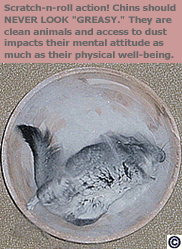
Allow your chinchilla access to at least a measuring cup full of fresh dust bath, placed in an appropriate container, for 5-10 minutes every day or every other day during the warm weather season, or when high humidity is a factor. During the cold-weather season, when humidity isn’t as much a factor because most home heating systems are also drying, then 5-10 minutes of dusting every other day or at least twice a week should keep your chin clean while stopping short of potentially causing dry skin.
If your chinchilla is a bathing fanatic, and some really do relish their bath quite a lot, then it’s fine to give a dust bath every day all year round just as long as it doesn’t result in dry skin. Dry skin is uncommon but it can occur, especially if a chin’s skin is exposed from fur biting or if it hasn’t completely grown back after being shaved for an operation or clipped to treat a wound. Sometimes a chin needs a dust bath after prolonged handling, and there are some chins that just seem to get more oily or “greasy” faster than other chins, and in that case, more frequent bathing is necessary. After all, in the wild, they’d get to bathe all they want.
A tablespoon of Arm & Hammer Baking Soda can be mixed into the dust bath to make it, and consequently, the chin, smell more “fresh,” although if your chin is urine-sprayed he needs to be wiped down with a damp cloth and dried thoroughly with a towel before being offered dust bath. “ARM & HAMMER® Baking Soda is made from soda ash, also known as sodium carbonate.” (ref- armhammer.com)
Be aware that some chins will urinate in their dust bath, “marking” it as theirs once they’re finished using it, and a different scent (such as scented dust bath) or change in the type of dust may prompt that behavior. It is acceptable to “reuse” dust bath if the chin has only left some fecal droppings behind, in that case simply remove the droppings and reuse the dust. However, if the dust is soiled by urine then it is not reusable, the dust must be disposed of, the container cleaned and filled with new dust.
If you smoke, please do it as far away as possible (preferably outside) from your chins because not only is secondhand smoke as harmful to pets as it is to people, the tar coats their fur and they sometimes clean their fur with their mouths, thereby ingesting the tar. If you take in a chin with a tar-stained.
Some chins have a slight sensitivity to dust, and especially if they’ve inhaled some small particles they may make the nose-clearing sound, wipe their nose or get watery eyes, but be observant because these symptoms can indicate the onset of pneumonia or other respiratory problems. If your chin seems particularly sensitive to the dust you’re using, try another brand, that often resolves the problem.
Rolling in a dust bath is learned by example from the parent. If your chinchilla does not roll in the dust bath, then at some point there was neglect in his early upbringing, either dust bath was not reliably provided for the parent so they could demonstrate this necessary routine or the kit was prematurely weaned before he had a chance to learn.
If your chinchilla is not dusting, administer a dust bath massage daily, as he gets accustomed to feeling clean by using the dust then VERY gently try to roll his back in the dust bath to help give him the idea, and eventually he will catch on. If a chin who has always dusted refuses to take a dust bath, this may indicate an injury ( e.g., it hurts to roll) or an aversion to the type of dust bath being used (some chins will not use a heavier, more sandy dust).
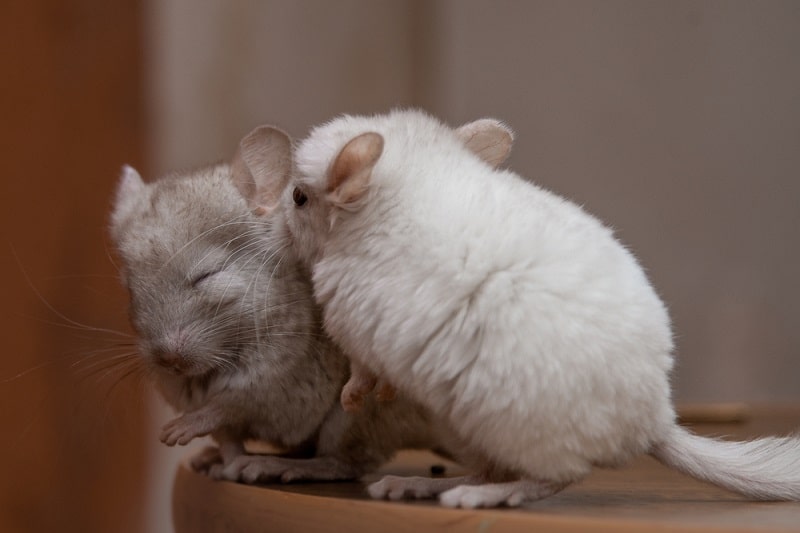
Besides dusting, chinchillas clean their face and whiskers with their forepaws, they also groom themselves and each other. Chins like to be “groomed” by their chinparent as well, per chin scratches.
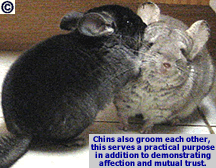
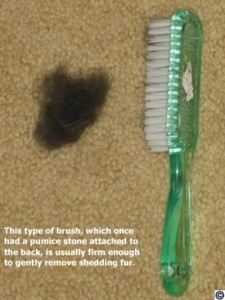
Grooming combs aren’t really necessary unless you’re planning to do competitive showing with your chinchilla. However, sizes 5 and 7 (combs with wider tooth spacing) can be helpful when a chin with a particularly thick coat is shedding and would benefit from having the excess hair removed. Chinchillas normally shed their fur in negligible amounts except during the warm weather months when somewhat more pronounced shedding may take place.
You DON’T need to trim your chinchilla’s finger and toenails. Chinchillas do not have claws, they have residual nails that are thin and fragile and protect their fingertips. Chinchilla nails are insubstantial enough to keep in check on their own, they’ll get enough routine wear such as during out-of-cage exercise time and by using a solid surface exercise wheel and solid (wooden) cage shelves and perches. Chins don’t do much digging in the wild (except of course when scratching and rolling in volcanic ash) because they inhabit the abandoned burrows of other animals, hide in vegetation, or find naturally formed holes and crevices to reside in.
The Right Dust Bath Container
- Any container used must be large enough for a chin to have room to roll and to allow for easy entry/exit.
- Plastic is a chewing hazard and therefore NOT suitable!
- Safe options include: glass fishbowl, aquarium, metal dusting box, metal dog dish, terra cotta planter, ceramic bowl, or Super Pet Ceramic Chinchilla Bath (large size is necessary but is often too small for adults) which is sold at: Doctors Foster and Smith, Pet Care Central, Strictly Pet Supplies
Chinchilla Dry Skin
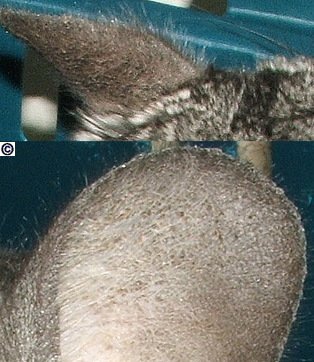
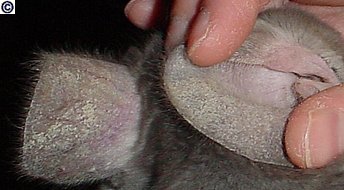
Causes
Dry skin is not a common problem, but under certain conditions, the cool, dry environment that chinchillas require can contribute to it. Dry skin can occur under the fur but it is much more likely to occur when the skin is exposed and vulnerable, such as from fur biting, or where the fur has been shaved for an operation or clipped to treat a wound. When the skin is being treated topically for something, like fungus, it can become severely dry. For skin that is normally exposed, like ears and footpads, dry skin is more common, and when footpads are not cared for they can develop calluses that crack open and lead to Bumblefoot.
Using a dehumidifier in summer in our climate is appropriate, our location is surrounded by water and high humidity is a constant during the warm weather season. The dehumidifier counteracts the humidity and more or less strikes a balance so that there are no dry skin problems in summer for our chins. Winter is another story. The hot air from the furnace that heats our house over our long winter creates a very, very dry atmosphere. Dry skin problems are much more likely to occur when the environment becomes significantly drier than usual.
Prevention
These suggestions should only be taken into consideration if your chinchilla is experiencing dry skin:
Increasing humidity with a humidifier is adviseable ONLY if the humidifier has a hypo-allergenic or air-purifying feature (ref- 1, 2) and is kept at the other end of the chinchilla room on a LOW setting. Be VERY cautious of creating an atmosphere for fungus, maintain proper temperature and humidity control in the chins’ environment: “Ideal conditions are 60°F to 70°F with a humidity level of 40% to 60%.” (ref- nhahonline.com)
Keep the household temperature at a low setting, no higher than 70°F during wintertime so that the furnace isn’t blowing hot air throughout the house any more often than absolutely necessary.
dust bath not only helps dry and lighten fur when it gets soiled, damp or greasy in the wild, it can also be drying to chinchilla skin. Chinchillas need to keep their fur dusted regularly but when a chinchilla has sensitive skin which has become dry due to climate changes, give fewer dust baths- once or twice a week at most.
Detecting, Appearance
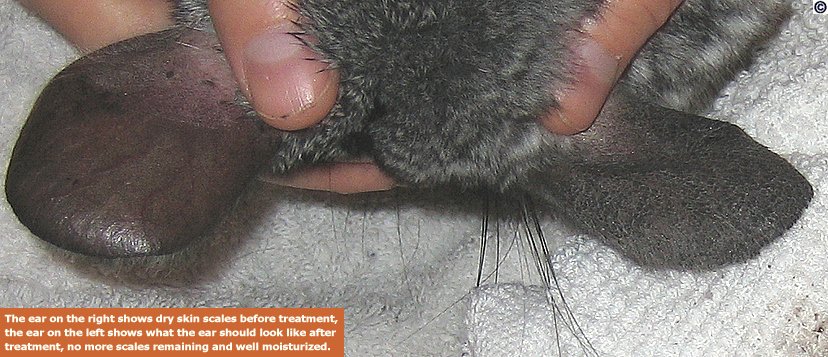
Typical dry skin shows no redness, only some scaliness or flaking that looks a lot like dandruff. In the case of skin that’s exposed as a result of fur biting, etc., when the chin does a lot of scratching in that area it can be an indication that the skin there is dry, irritated, and itchy.
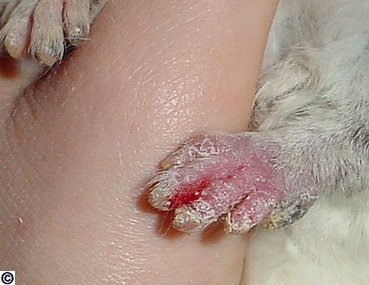
Severely dry skin, such as the paw photo, will appear red and scaly. The blood between two of the toes occurred when the cracked skin bled as the chin ran about trying to avoid being picked up and treated for her dry skin. Her skin became severely dry as a result of treatment for Ringworm fungus. When the skin is this severely dry, it can closely resemble Ringworm fungus: both have thinned or missing fur and the skin that is showing underneath is reddened with tiny lesions and scaliness. Unless you’re experienced in dealing with both it’s practically impossible to differentiate between the two, but one thing is certain: fungus will spread and there will eventually be more infected patches. If in doubt, don’t take chances, seek the expert help of an exotics specialist vet immediately.
Treatment
There is no treatment for dry skin under the fur, only the preventative measures named above can help alleviate that.
When not located under the fur, such as with exposed skin or paw pads and ears, treatment for typical or severely dry skin cases is the same. Have ready a hypoallergenic moisturizer (Jojoba, Vitamin E oil, Aveeno, pure Aloe Vera, unscented Neutrogena Hand Cream) and a cloth for dabbing off any excess moisturizer and wiping your hands. Place the chin on your lap, put a tiny dab of moisturizer between your thumb and forefinger, and gently massage the moisturizer into the dry area. When doing ears, DO NOT go into the ear canal with the moisturizer.
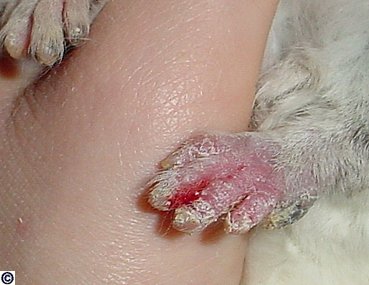
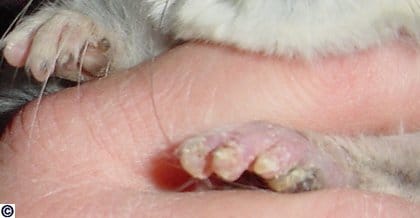
With exposed skin or paw pads, apply moisturizer until you’re certain the dry skin is well saturated. With dry skin scales on ears, they will begin to slough off as you rub in the moisturizer, you’ll see tiny flakes of gray on your fingertips. Just wipe off the scales on the cloth and keep reapplying moisturizer until the ears are well moisturized and the scales have all been rubbed off, as depicted in above before and after photo. After treatment, place the chin back in his cage and allow him to clean up with a dust bath. Counterintuitive as this may seem, it won’t cancel out the effect of a good moisturizer and chins have a psychological need not to feel “greasy.” Check the dry area daily, applying treatment, and giving a dust bath afterward until the skin is healed.
Chinchilla Calluses
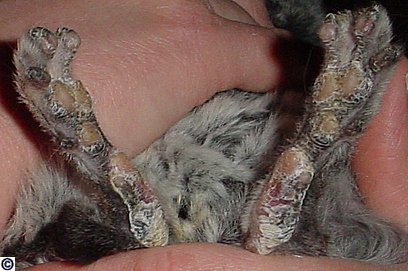
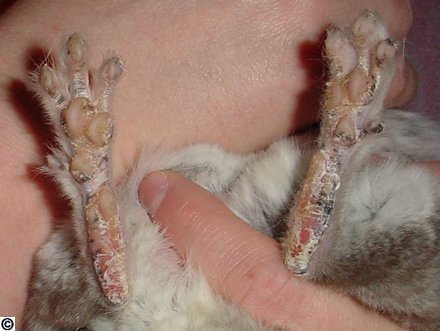
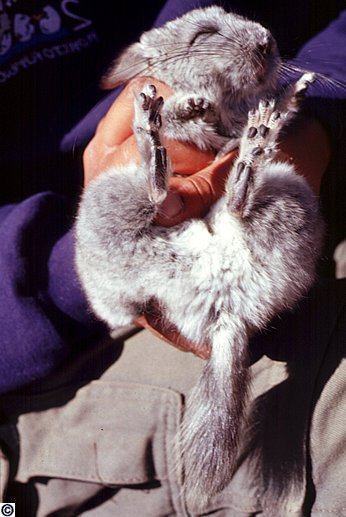
Causes of calluses on chinchilla
Calluses on the feet of chins in captivity are pretty common. Because chins need a cool, dry environment that simulates their experience in the wild, the skin on footpads can simply dry out from time to time. When this happens in the wild and calluses form, they’re sloughed off as the chin hops on rocks (including volcanic rock, think pumice, like the Lava Ledge) and runs across rough terrain. In captivity, neither wire nor smooth solid flooring substitutes for the sloughing action that chins would get in the wild and so calluses go unchecked unless they’re filed by the owner. The recommendation to give chins something in their cage that is flat or soft to rest their feet on is intended to relieve feet from the constant pressure of wire mesh, not as prevention against calluses.
Feet should be checked for calluses at least monthly. Older or heavier chins whose feet have naturally spread with age or weight are more susceptible to advanced or overgrown calluses that form “flippers” on the sides of their feet. Advanced calluses can become problematic and lead to Bumblefoot.
Treatment of calluses
Two people should be present for this, seated across from each other with one securely holding the chinchilla bottoms-up on his lap so that the footpads, the bottoms of his feet, are easily exposed. The person holding the chin should support both feet throughout the process so that the chin isn’t dangling or struggling while the other person, with nail file ready, gently files at the calluses.
DO NOT attempt to “flake” or “tear” off the calluses, although they are just dead skin they are attached to live skin, and attempting to tear off a callus can cause pain and bleeding. Chinchilla feet are very sensitive and even the act of gently filing the calluses will be frightening and upsetting, especially at first, but don’t let that dissuade you from treating the calluses because otherwise, they could become a case of Bumblefoot. Just speak soothingly to him while holding him securely and especially supporting his feet well, then file as precisely as possible, being careful not to slip with the file and scrape the sides of the feet where there is only flesh, that would be VERY painful, like a bad rug burn.
If calluses are neglected, or if the chin is large or older and his calluses have gone unchecked for a little while, then they may spread outward and it can look like the chin is wearing flippers. In this case, it is necessary to file some at the extended edges where the callused area has spread, again being VERY careful not to hit flesh with the file. Since chinnie feet can spread a little naturally with weight or age, be sure that you’re only filing at the calluses.
Another alternative to treating overgrown calluses is by using vet prescribed Trypzyme (ref- 1, 2). Ask your exotics specialist vet if you think this might work best for you, according to our vet, “Trypzyme is an enzyme-based topical that is used to relieve excessive callus formation and to treat wounds…I haven’t used it in years and have not tried it on chins. I don’t think it would pose a problem to use it in chins but just to be safe, I would keep them from ingesting it thru licking a pawpad, etc.” (DVM Glikis-Scott, was Fernandez, of the Birmingham Veterinary Clinic in MI)
After treating the calluses, liberally apply one of the following to the footpads, massage it in well and return the chin to his cage: Neosporin First Aid Antibiotic Ointment or a hypoallergenic moisturizer- Jojoba, Vitamin E oil, Aveeno, pure Aloe Vera, unscented Neutrogena Hand Cream. We personally recommend trying the Neutrogena, it has amazing moisturizing properties and expedites healing dramatically.
While treating calluses, be sure to keep the cage floor especially clean as a precaution against infection: wipe down all cage levels, perches, etc. once daily with a damp rag that has Isopropyl Rubbing Alcohol on it, once wooden surfaces have dried they’ll be safe again for gnawing.
Bumblefoot (Ulcerative Pododermatitis)
Bumblefoot is a condition that results from neglected calluses, it is, essentially, an infected callus. Chins that are housed on EITHER wire mesh OR smooth solid flooring can get calluses that develop into Bumblefoot, read about the cause of calluses above.
Other animals, such as rabbits and guinea pigs, can also develop Pododermatitis but their causes and treatment can differ from that of chinchillas due to their particular attributes. (ref- peteducation.com)
Calluses that aren’t kept in check and treated can split or crack open, essentially creating an open wound on the footpad that is highly susceptible to infection, especially since chins walk where they’ve urinated and that bacteria can invade the wound. A case of Bumblefoot and how it was treated is described in this document.
While treating Bumblefoot, as with calluses but even more important once an infection is present, be sure to keep the cage floor VERY clean. Wipe down all cage levels, perches, etc. once daily with a damp rag that has Isopropyl Rubbing Alcohol on it, once wooden surfaces have dried they’ll be safe again for gnawing.
Missing Fur
Medical Explanations
- Abscess
It is possible for the growth of abscess to be indicated by a hairless patch. In this case, unlike with wear, it is usually completely clear of fur, without the bits of fuzzy new growth common to a worn spot. If you palpate the area and it feels like there is a spongy or hard lump beneath (growth, tumor), or it feels like a small sac containing liquid (abscess), consult the expertise of your exotics specialist vet immediately. The chin may not be in pain, but the area must be professionally examined to determine exactly what it is and how to treat it.
- Malocclusion or Cold/Pneumonia
Advanced malocclusion can cause a chin to paw at his mouth, chin, or nose and wear off the fur in those spots as he tries to clean his face of drool and mess. Pawing at those areas to remove nasal discharge could also be a sign of cold or pneumonia.
- Illness/ Injury
If the chinchilla is experiencing internal pain, has sustained an injury or had surgery recently (regardless of whether they’re on pain medication, some chins will pick at the operation site) and for any of these possibilities has been obsessively pawing at or barbering the affected area, it can cause the fur to be shorn or worn away. Observe your chinchilla closely to see if he is favoring a paw or limb, if his fecal droppings are normal, etc. If you suspect the presence of injury or pain, take your chinchilla to an exotics specialist vet immediately to be x-rayed/ examined for breaks, sprains, etc.
Wear, Rubbing
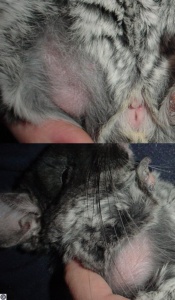
Causes of chinchilla wear
It’s not uncommon for a pet chinchilla who is large or heavy to wear mostly-bald patches under their arms or legs. It results from rubbing that occurs naturally as they play in a spacious cage and get adequate exercise, in itself, it’s not detrimental or causes for concern. Wear can also occur if a chin rubs a spot on his body quite often, by something he does. For instance, we have one chin who is always peering over the lower shelf of his cage and rubbing his mid-chest area on it. Then he peers out of his house to watch TV, rubbing the same mid-chest area.
Detecting, Appearance, Treatment
Wear will NOT appear cropped, there will be NO scaliness, scabs, scratches, or blood. The skin may appear pink, from the rubbing, where the bald patch is, but there is no need to treat it unless it appears to be raw and painful to the chin. In that case, massage a little hypoallergenic moisturizer (Jojoba, Vitamin E oil, Aveeno, pure Aloe Vera, unscented Neutrogena Hand Cream) into the areas. Once the moisturizer has been absorbed allow a dust bath so the chin won’t feel messy, this will not counteract the benefits of the lotion massage.
Fights
Detecting, Appearance, and Cause
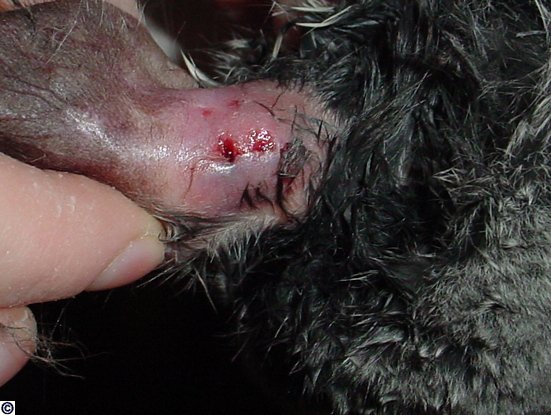
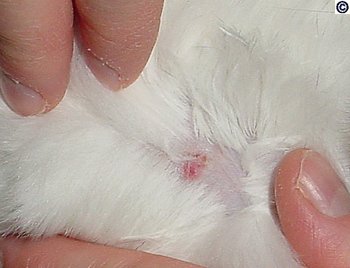
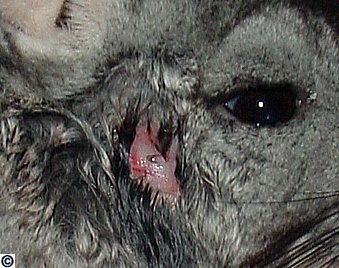
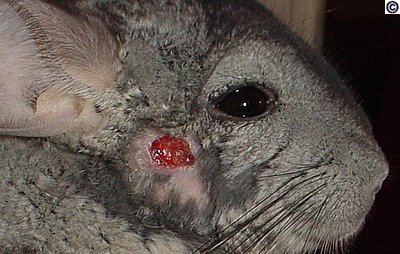
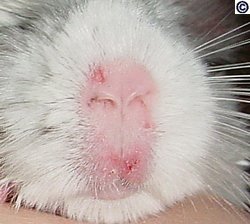
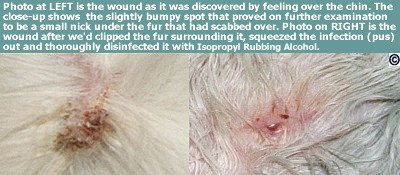
If you know or suspect that your chin has been nipped, bitten, or in a fight with another chin, examine him for bite wounds immediately. Obvious signs of conflict are scratches, gashes, gouges, and blood or patches of missing fur (or tufts lying about the cage) that may be more than just fur slip, there can be a fight wound on the hairless spot.
Gently and securely, hold you chin up so that you can blow into the fur on his body (not face) and examine the skin beneath for wounds. ALWAYS blow on the chin’s fur under good light to get a closer examination- scratches and bite marks are easily hidden by their thick coat and what goes unseen and untreated can become infected (by bacteria in the saliva of other household pets, especially), abscessed, and even lead to death.
The most commonly attacked areas, which also tell something about the circumstances surrounding the fight, are: wounds to the top of the head and ears (especially at the base where the ears meet the body) signify that the victim was mounted and in a submissive position when attacked; wounds to the nose or lips reveal that they were face-to-face and could have been rearing up and challenging each other over something shared or scarce (hideaway, food, water, etc.); wounds to the back demonstrate that the victim attempted resistance and was caught despite trying to avoid conflict.
No wounds on the attacker mean that the victim did not fight back but don’t count on the victim continuing to be incapable of anti-social behavior in the future. Chins can learn anti-social behavior by example and may store that knowledge to be used next time in their defense, or as a preemptive. Never put two chins together again after the physical injury has been inflicted (wounds, missing digits, etc; fur slip and urine-spraying are not injurious), it presents an ultimatum, and the victim may either die of acute shock or kill his cagemate in advance, to prevent further attacks.
Treatment and Prevention
Depending on the number and severity of the wounds, and especially if your chinchilla is in shock, when there has been a fight it is strongly advised that you rush him to the nearest exotics specialist vet for immediate examination and treatment!
If the fight wounds are on the skin hidden beneath fur, then the fur on and surrounding the wound MUST be trimmed so that the wound cannot become matted by the fur, this leads to infection and abscesses. Two people should be on hand, one to carefully hold the chin still while the other uses a small pair of scissors, such as nail scissors, to trim the fur on and around the wound before administering treatment. Wounds that are exposed, such as those on the ear or face, can be treated as is.
Disinfect the wounds by gently dabbing them with a soft cloth (no Q-tip or cotton ball that can leave stray fibers in the wound) soaked in Hydrogen Peroxide, then put a light dab of a hypoallergenic moisturizer (Jojoba, Vitamin E oil, Aveeno, pure Aloe Vera, unscented Neutrogena Hand Cream), Neosporin First Aid Antibiotic Ointment or Silvadene (vet prescription) on the wound. Treat fight wounds this way once daily until it’s obvious that healing is well underway, then observe regularly until all fight wounds are completely healed. ALWAYS disinfect before covering the wound with something to expedite healing, a covered wound that has not been disinfected first can lead to abscessing!
If it’s suspected that there are multiple fight wounds and the chin is not in shock, it is advisable to administer a wet bath because this accomplishes two necessary things: 1) cleans all wounds 2) reveals the location of all wounds during the blow-drying process so that they can be treated.
While your chin is undergoing treatment it’s important to perform a dust bath massage, keeping clean keeps the chin’s spirits up and a positive attitude will expedite recovery. Supervised introductions and an awareness of what can lead to cagemate conflicts can prevent fighting.
Fur Slipping
Explanation
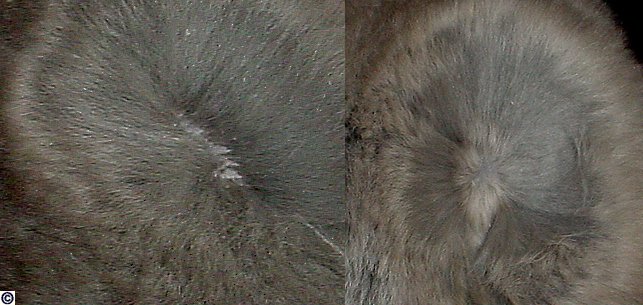
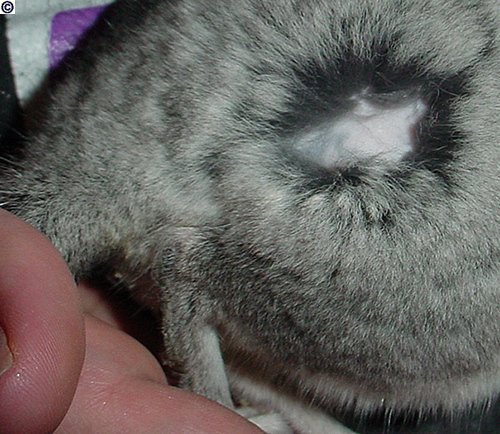
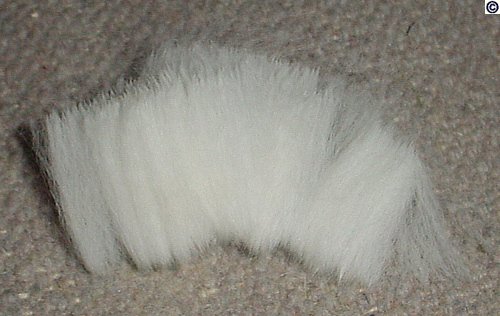
Fur slip is not the same as shedding, which does occur with chins the way it does with other animals but to an almost negligible extent. In the case of fur slip, the area will NOT appear cropped, there will be NO redness, scaliness, scabs, scratches or blood- only a bald patch and cleanly-released (the whole tuft, from root to tip) fur. Fur slipping does not hurt the chin and the fur will grow back.
If you startle or frighten your chin in the process of picking him up or handling him, he may release or “slip” fur at the point of contact. Just as porcupines release quills in self-defense, a chinchilla is able to voluntarily release its fur at the spot where it’s touched, so that a predator in the wild or another chinchilla will get only a mouthful of fur while the chin himself escapes. Slipped fur is detectable at the moment it happens: there are small tufts of fur in your hand, on your clothing or on the floor, and the chin has a bald spot/s where the fur is cleanly gone. If slipped in very small quantities, as in whisps, the bald patch may not be immediately noticeable due to the chin’s fur density. A calm, gentle approach and secure handling of your chin can help prevent fur slip.
Fur Biting, Chewing, Barbering
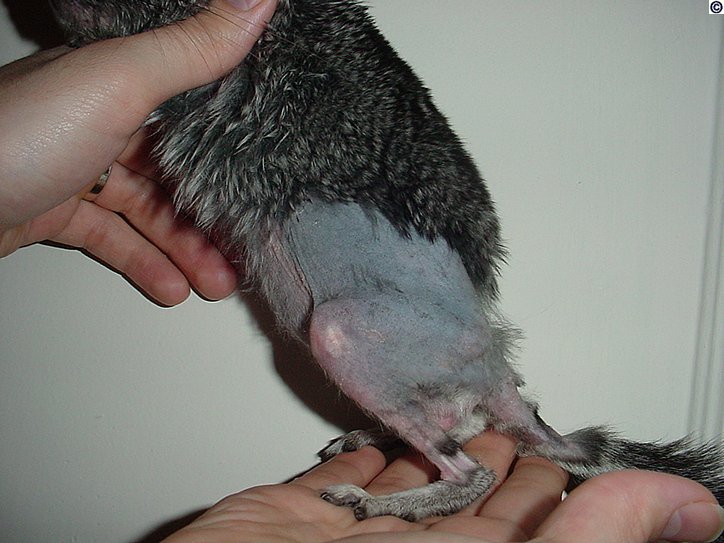
Detecting, Appearance
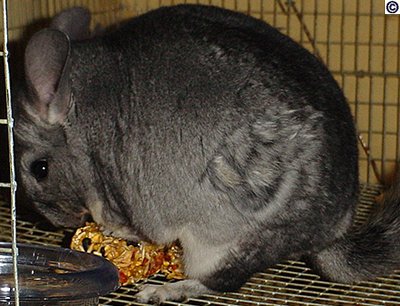
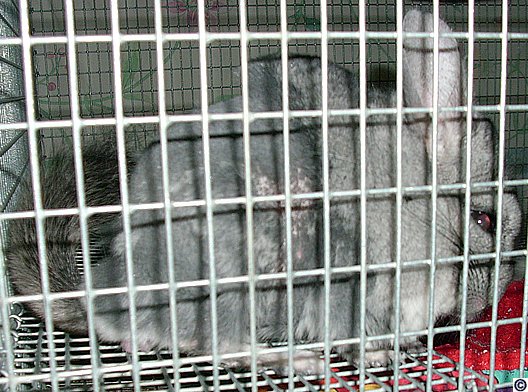
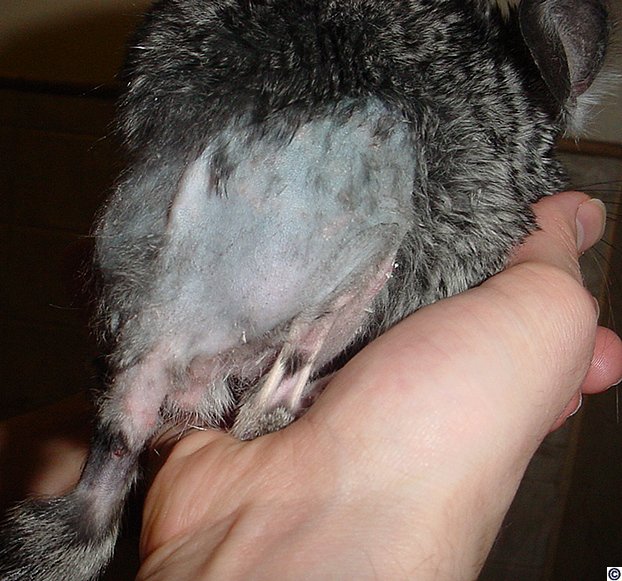
If your chin’s fur DOES have a “chopped” look with NO signs of redness, scaliness, scabs, scratches or blood, then they are fur biting, which can also be called, “fur-chewing” or “barbering.”
Fur biting is the result of a chin biting or chewing at his fur, and it appears as a patch of fur cropped shorter than the rest. It is impossible to tell by watching whether a chin is in the act of fur biting or just intensively grooming, you only know by the aftermath. The most common location for fur biting is on the flanks, but it can occur anywhere the chinchilla can reach, including the underside, around the legs, and the tail. In severe cases, the entire lower half of the body can be barbered right down to the skin. Although fur biting does not hurt the chin, in severe cases where most of the chin’s fur is removed care should be taken to ensure the chin doesn’t get chilled. It is possible for a chin to barber another chin and this can happen when the fur biting chin grooms his cagemate and just takes things a bit too far. But that is the rare exception, almost always it is the affected chin who is barbering himself.
Cause and Treatment
Fur biting is simply a neurotic reaction to stress which can come in many forms, including a medical problem (internal pain, injury, recent surgery, amputation, etc.) or an environmental stress factor (boredom, malnutrition, cagemate incompatibility, etc.). If a medical problem is the suspected cause, contact your exotics specialist vet immediately and ask if painkillers should be prescribed. However, MOST of the time fur biting results from an environmental stress factor, especially boredom.
Much has been speculated on why some chins resort to barbering under stress and others don’t. It is certainly a neurotic reaction, essentially self-mutilation, but in itself, it does not harm the chin. Hairballs in chinchillas are very rare and the care myth (extrapolated from rabbits) that chinchillas need regular preventative treatment (papaya, Petromalt, etc.) is finally becoming a thing of the past. Fur biting is probably only hereditary in the sense that temperament can be hereditary, that is, when one high-strung (should be regarded as NFB) or oversensitive chinchilla gives birth to another of the same temperament and both barber that makes fur biting APPEAR to be genetic when in reality it’s just the temperamental predisposition that was passed on.
Fur biting is predisposed by temperament, and the more high-strung or oversensitive a chinchilla is, the more likely it is that an environmental stress factor will trigger a fur biting reaction. Just as some people can weather any crisis without displaying neurotic tics, because their temperament makes them more adaptive and resilient, some chins will never barber no matter what they endure while others do resort to fur biting under stress.
Fur biting is not uncommon and even chins thought incapable of it may begin fur biting when exposed to a particular environmental stress factor. To stop the fur biting, find and resolve the environmental stress factor which may take time to discover and the chin may continue to barber sporadically even after the problem has been addressed, because once a chin has resorted to fur biting as a response to stress, he may compulsively resort to it again in future. Usually, though, the barbering will clear up relatively soon and remain resolved in relation to the stress factor that was addressed.
Older chins or those who have barbered compulsively for years can take longer to discontinue if they are able to at all, for them fur biting has become a routine reaction and it’s often their first resort when confronted with any stress. There are chronic cases (most fur biters aren’t chronic) that can arise in especially high-strung or oversensitive (or who may also be a victim of neglect/ abuse/ abandonment) chins, for these we recommend trying Bach’s Rescue Remedy.
Fur biting that leaves the skin exposed makes the chin vulnerable to dry skin that may require treatment.
Fur will regrow at a rate that corresponds with the chin’s age and mild or moderate fur biting cases will regrow more quickly than those where the barbering is right down to the skin, as in severe cases. When a chin is significantly underweight or severely fur-bitten, he is more vulnerable to cold and drafts; getting chilled lowers the body’s resistance to sickness. Put a sheet around his cage (as described on Routines) and provide some cloth (a baby blanket of fleece in his house, a hammock, Cuddl-E-Cup with strap cut off, Comf-E-Cube, Chilla Pilla with The Day Bed) in his cage so that he can retain body heat, it’s also a comforting convenience. In cold weather climates, it may also be advisable to provide a heated bed (such as Lectro Small Animal Heated Pad), which can be placed inside a pillowcase for the chin to sit on and stay warm. We’ve noted that chins with significant weight loss or fur loss are attracted to heater vents during playtime, this is due to loss of body heat. As long as the chin is able to move off the heated bed at will, there is no danger of him overheating himself.
Prevention
If you are a pet breeder seeking optimum health and temperament in offspring, fur biters are NFB because passing on the temperament qualities (high-strung, oversensitive) that predispose a chin to fur biting won’t make for offspring that are relaxed, happy, sociable and capable of really enjoying life.
Chins that are high-strung or oversensitive are often exceptionally intelligent, which makes it difficult for them to cope with an underactive or mundane environment during their waking hours, thus for them, the environmental stress factor is often sheer boredom. As with all chins and especially fur biters, they’ll benefit from an interesting variety of engaging distractions in their environment. This includes having a LARGE cage to accommodate running and playing, a variety of chew toys, at least one hideaway per chin and a cage wheel to help decrease stress and boredom inside the cage; TV during waking hours will provide environmental stimulation when they’re not actively engaged in out-of-cage exercise and interaction.
Ringworm Fungus
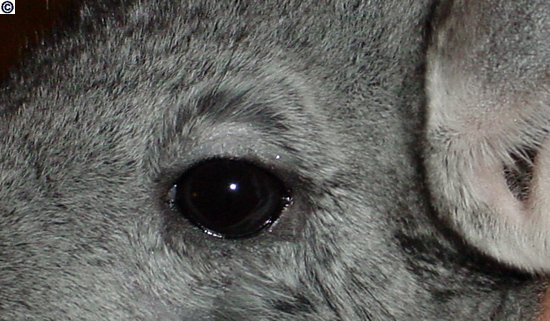
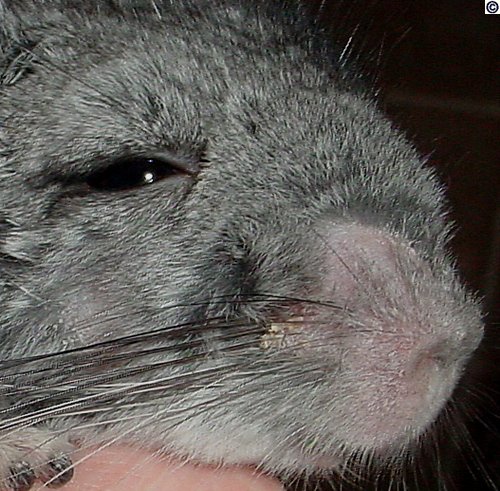
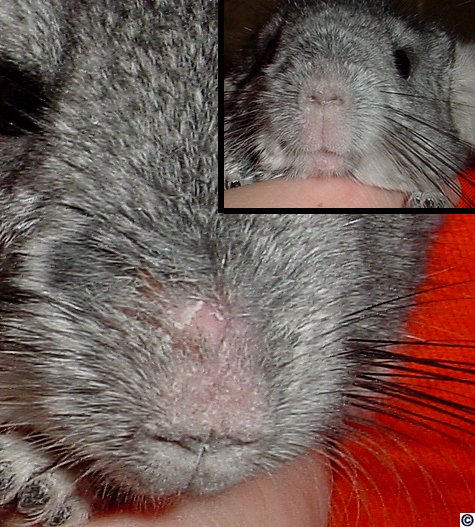
Care Myth: Anti-Fungal Prevention
“Prevent fungus by putting anti-fungal powder in the chin’s dust bath” …this care myth is both dangerous and unnecessary! Fungus is not a constant threat where adequate cleanliness, among other normal preventatives, is present. When dust flies about the chin’s cage environment it is inhaled and settles on everything from chew toys to hay and pellets, but when the anti-fungal powder is added to dust baths as some misguided “prevention,” that changes everything. Anti-fungal powder warning labels make it clear that the product is for external use only and should ingestion occur, it is advised to contact a “poison control center.” Anti-fungal powder (Desenex, Tinactin, Gold Bond- be sure it is medicated, it must have an anti-fungal agent like Miconazole) should be used ONLY to treat a diagnosed case of ringworm, and then there are precautions to follow.
Azure Chinchillas confirms the problem with this myth, “The common “breeders home-treatment” consists of adding about a tablespoon of athletes foot powder to the chinchilla’s sandbaths, so they self-medicate. It is also routinely used as a “preventative” by many breeders, but I have my reservations about the wisdom of using this, as my chinchillas have displayed breathing abnormalities when the powder has been added to their sandbaths, so I no longer add it as a prophylactic. Even with anti-fungal powder added to sandbaths, a cure is not guaranteed if the infection is virulent… Thought must also be given to the fact that the chinchillas are liable to groom off anything that is applied to their bodies, and these types of human medication can be harmful to them if ingested.”
Chinchillas.com adds, “A common practice of many breeders is to try to completely prevent fungus by routinely administering anti-fungal agents in the dust. This can be an ineffective if not dangerous practice. The constant exposure to certain antifungal agents does not ensure that all strains of fungus will be prevented, and when a strain does appear in a herd that uses a constant preventative, it is often a particularly difficult strain to eradicate.”
Detecting, Appearance
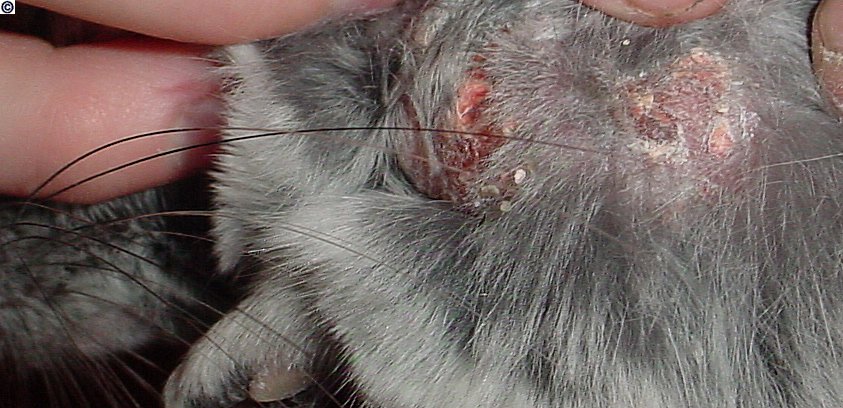
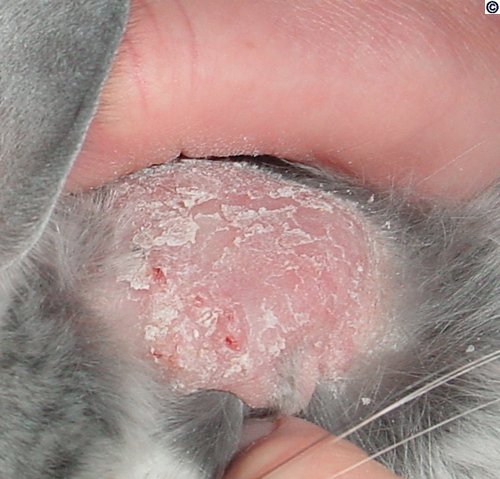
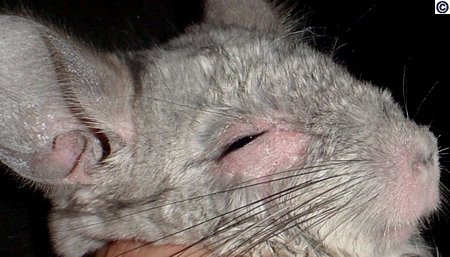
When people talk about chinchillas and fungus, they’re referring to ringworm fungus. Ringworm fungus is not a worm but a fungus that affects the skin and also causes fur loss. Note that there are strong similarities in appearance between fungus and severely dry skin (photo of uncommonly sensitive skin that became dry in response to treatment for ringworm), which is much less common than fungus. According to Pet Care Veterinary Hospital, “Changes in your chinchilla’s fur warrant a visit to your veterinarian, because lice, mites, or ringworm can also cause hair loss.”
If a chin DOES have small patches, especially around the eyes, nose, whiskers, and chin (where fungus usually begins), where the fur is thinned out or missing and the skin that is showing underneath is inflamed and red with tiny lesions, flaking scabs, scaliness or broken whiskers (from pawing, ringworm is VERY itchy), then you need to take your chinchilla to an exotics specialist vet IMMEDIATELY for testing! The fungus can spread quickly on an affected chin because as he scratches or cleans (also examine the chin’s urethral cone or penis) himself it will travel, typically beginning on the face, then the paws, and then spreading across the body.
At the vet’s, insist on a culture analysis because “only 50% of a certain species of ringworm fluoresces under the glow of the Woods lamp, culture is used to verify the diagnosis.” While waiting for the culture analysis, perform the cagemate precaution in step 2 of the Treatment section below.
Contagion, Cause, and Prevention
Ringworm is a fairly commonplace fungus that’s cross-species contagious and is transmittable to and from people as well as animals. According to Wikipedia: “Ringworm is very common, especially among children, and maybe spread by skin-to-skin contact, as well as via contact with contaminated items such as hairbrushes. Ringworm spreads readily, as those infected are contagious even before they show symptoms of the disease.”(ref- wikipedia.org)
Thus, ringworm spreads by contact with the fungus itself, a carrier of the fungus, or something used by the carrier. We’ve read that some types of ringworm can spread by airborne spores but in our and other’s experience, as long as the affected chin/s were being properly treated and contact/ cleanliness precautions observed, there were no new outbreaks.
Chinchillas contract ringworm chiefly by exposure to conducive environmental conditions: unclean husbandry practices, not being thoroughly dried after getting wet, access to places that harbor mold and fungus, such as a bathroom, and especially exposure to dampness or high heat/ humidity. A weakened immune system or environmental stress can make a chinchilla more vulnerable to the ringworm fungus.
Prevention includes: maintaining a clean cage and surrounding environment, controlled temperature and low humidity, properly-stored hay and wood, some quiet solitude for daytime rest, regular out-of-cage exercise time, and awareness of the Environmental Stress Factors. If you believe your chins may be especially vulnerable, take a cloth sprayed with Isopropyl Rubbing Alcohol and wipe down cage levels daily, then allow to dry. Cages should always be scrubbed clean at least once weekly.
If you find yourself constantly battling fungus then you need to consider the SOURCE of the problem and address that rather than just focusing on controlling the symptoms after an outbreak has occurred: change soiled bedding more frequently in cages where the chin has direct contact with it, check the air conditioner to see if it needs to be cleaned out so that it’s not blowing mold spores into the air, consider purchasing a dehumidifier, perhaps a recent change or even extreme boredom has increased the stress level among your chin family, etc.
Treatment
- As soon as the fungus is discovered the affected chin MUST be quarantined. He needs his own cage in a separate room away from other chinchillas and household pets. You will need to wash your hands with anti-bacterial soap after handling the chin or any of his accessories.
- Clean the affected cage with a disinfectant cleaner such as bleach, Apple Cider Vinegar, or Isopropyl Rubbing Alcohol. Cagemates that appear unaffected may still be contagious. As a precaution, sit with a towel on your lap and massage anti-fungal powder (Desenex, Tinactin, Gold Bond- be sure it is medicated, it must have an anti-fungal agent like Miconazole) into the fur over their whole body- being careful not to get any in the eyes or mouth- before returning them to the clean cage. Treat cagemates like this once daily for a few days and continue to observe them for at least a week to see if they manifest ringworm.
- In the quarantined chin’s room, cover his cage with a sheet as described on Routines. Keep his dishes sanitized in the dishwasher and clean cage accessories and chew toys by soaking them in undiluted Apple Cider Vinegar, then rinse well and allow to dry completely before returning them to him.
- To treat the affected chin, sit with a towel on your lap and have on hand a few Q-tips, Isopropyl Rubbing Alcohol, and the anti-fungal powder as described in #2. Soak the Q-tip in Isopropyl Rubbing Alcohol and gently, carefully rub the first affected area and while it’s still damp, rub the anti-fungal powder in gently with your fingertips. If an anti-fungal cream was prescribed by your exotics specialist vet, use that instead of the Isopropyl Rubbing Alcohol. Be VERY careful NOT to get any cream/ alcohol/ powder in the chin’s eyes, ears, nose, or mouth! Repeat this process on all the affected areas. Finish by rubbing the anti-fungal powder over the affected chin’s entire body. Do all of step 4 twice daily.
By using the above regimen and by cleaning the affected chin’s cage environment as often as possible (but at least once weekly), a small patch of fungus, discovered immediately, should be cleared up in about five to seven days. Several patches with some in an aggravated, advanced state should begin healing after a couple of weeks of treatment. You can tell that healing has begun when the redness diminishes, then the scabbing/ scaliness disappears and finally, the fur will regrow. Perform the four steps above until the redness, scabbing/ scaliness is GONE. The chin can be returned to his usual living arrangement after all his fur is in a state of regrowth and there is absolutely no sign of fungus. Be aware that he may need to be re-introduced to his cagemates since they will have regrouped in his absence
Related Video:
Care Myth: The Wet Bath
There are a number of ludicrous myths surrounding the “chinchillas should never get wet” admonishment, dire consequences of which include the chin having his organs crushed by the weight of the water on his fur and the complete loss of fur, which then refuses to ever regrow…EVER. The stuff of urban legends, to be sure.
The alarm and myths surrounding wet baths originate from the concern that the chin won’t be thoroughly dried if he does get wet, and this is a valid point. Chinchilla fur is extremely dense, which means that it easily traps and retains moisture. If a chin is housed in damp conditions or stays wet (leaky water bottle, drooling from dental disease), then he is particularly vulnerable to fungus or pneumonia, the latter of which can cause death. Also, foresight and precaution must be taken to ensure that when a chinchilla gets wet or is given a wet bath, that he is not allowed to get chilled. He needs to be kept free from drafts until he can be dried THOROUGHLY, and when he is returned to his cage fresh dust bath should be waiting for him.
Wet bath can be beneficial and safe for chinchillas but it is ONLY recommended for situations where a dust bath will not clean adequately, for example: if a chin has come from a filthy cage environment, is excessively stained from urine-spraying, is matted, incontinent, grease-slicked, has fallen in the toilet, is tar-stained (smoking indoors not only damages their health but also causes coat discoloration, stickiness, and stench), etc.
Dust bathing is rather like vacuuming, it’s working fine for ordinary cleaning jobs like the ones that wild chinchillas would encounter in their natural habitat, but for chinchillas living in captivity, there are sometimes extraordinary circumstances that require a more thorough cleansing. Wet baths are definitely the exception, not the rule!
An alternative to a wet bath can be to wipe down the chin with a warm, damp cloth in a draft-free room and then gently blow dry or towel dry completely before giving a dust bath. On tough jobs, this doesn’t work as well as a wet bath but it’s better than trying to clean up serious grime with dust bath alone.
It’s not unusual for a chin that is rescued from a neglect situation to need a wet bath, and it doesn’t have to be a big deal for the chinparent to give one, especially since the real stress of coping with a matted, filthy coat is ALWAYS greater than the PERCEIVED stress of getting clean via a wet bath. We’ve bathed many a rescue chin and it is just not that awful or traumatizing, for either chinparent or chin. Once the chins realize they’re getting clean at long last and nothing bad is happening, that you won’t let them drown, then they’re often quite pleased with the process. It’s not all that uncommon for a chin to actually enjoy the water and want to put their face closer to the blow drier (set on low) to appreciate the feel of it on their face.
Sometimes chins will get mats, most often along their lower backside. Mats can result from poor hygiene habits, consummation following mounting, a malocclusion and drooling cagemate huddling against them for warmth, or in the case of a chin with a particularly dense coat whose fur during shedding time is released but become tangled rather than eventually shed. Matted fur on a chin somewhat resembles dreadlocks (ref), except not quite so cool, literally. A chin with matted fur is an uncomfortable chin, not only because chins are very clean animals but because matted fur makes a chin feel hot and weighted down.
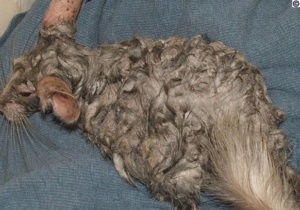
A wet bath will cleanse some mats and loose fur from a chin’s coat, but fur that remains tightly matted will need to be cut out VERY CAREFULLY with a small pair of scissors such as nail scissors (large scissors can poke and they’re more difficult to maneuver with precision). It’s best to cut out mats right after a chin has had their wet bath, just before blow-drying. This requires two people, one person to hold the chin securely while the other does the cutting, precisely and quickly, so the chin doesn’t get jabbed or cut with the scissors or become chilled while still wet. DON’T attempt to cut the mat right down to the skin, they often start there but it’s better to get only as close as safety allows, without risking jabbing the chin’s thin skin. Scroll down on this Chinchillas4Life page for a video about clipping mats.
Administering a Wet Bath
It’s best to have two people on hand when administering a wet bath. The bathroom air should be warmer than the chin is used to, at least 70°F so the chin won’t get chilled while he is soaking wet. Running hot water or turning a hairdryer on high for a minute or two can help raise room temperature but it should not be allowed to get too hot in the room. Doors and windows MUST be kept SHUT to prevent drafts!
Have two large towels, a hairdryer, and a dust bath ready and set aside in the bathroom. You need a mat or something non-slippery (even another towel) set in the tub bottom so that when you’re soaping the chin he’s not sliding about. In case your little guy might get away from you, put the toilet lid down in advance. We found dog and cat shampoos to be drying on chinchilla skin, an herbal shampoo that doesn’t contain extra moisturizers or strong scents is best.
Bring the chin into the bathroom and close the door. One person should hold the chin while the other adjusts the water temperature on the bathtub tap. The water should feel WARM, not hot, not cool, but just above lukewarm. Don’t turn on the water full blast, about medium pressure is fine. Hold the chin securely with both hands and pass him under the water flow from tail to nose, keep his head pointed DOWN by nudging it with your thumb if needed. Remember- chins BREATHE through their nose, it is VERY important that he is passed under the faucet BRIEFLY, just enough to get him wet, and that he does not raise his head while going through- KEEP THAT NOSE DOWN!! Water up the nose for a chinchilla is just like drowning. If you have a hose attachment on your bathtub, this actually works better, in which case just train it over the chin with one hand and offer him your other hand for balance as he sits on the mat in the tub.
After wetting the chin, place him on the mat or non-skid surface that you set on the tub bottom. Hold him securely while reaching for the shampoo. Gently suds him all over, tweaking any fur that is a trouble spot, that’ll help loosen or untangle any overlooked mats. Massage the shampoo over him thoroughly but quickly, the wet bath process should be kept as brief as possible to avoid possible drafts or chills. Cover everything with shampoo EXCEPT the eyes, ears, nose, and mouth, keep soap away from those areas completely. Rinse the chin, in the same manner, described previously- warm water, medium water pressure, passed under the water flow from tail to nose with the nose kept down- but this time it will take more than a single pass under the faucet to cleanse the shampoo from his fur.
When the chin has been thoroughly rinsed, have the other person ready with the first large towel. We always wrap our bathing beauty securely in the towel with just his little nose and mouth showing and hold him for about five minutes, talking softly and soothingly to him, before blow-drying. This helps absorb excess water and expedites the drying process. Chins tend to act exhausted after being bathed, don’t be surprised if he seems a little limp, that’s typical.
When the holding time is up, have the other large towel ready- unfolded and placed on the floor, preferably in a corner, and place the chin on it. Chins often do a “doggie shake” to try and fluff out their wet fur. One person should wave the hairdryer around the chin on LOW speed at the LOWEST warm setting (not cool or cold air) while the other sits nearby, ensuring the chin doesn’t take off and helping the blow drying process by fluffing out the fur as it’s being dried. If the chin is trembling, he’s chilled and the hairdryer heat setting can be temporarily increased. It is VERY important to keep the hairdryer moving and to keep it at a reasonable distance, don’t concentrate it on any area for more than a few seconds because a chinchilla’s skin is very thin and sensitive.
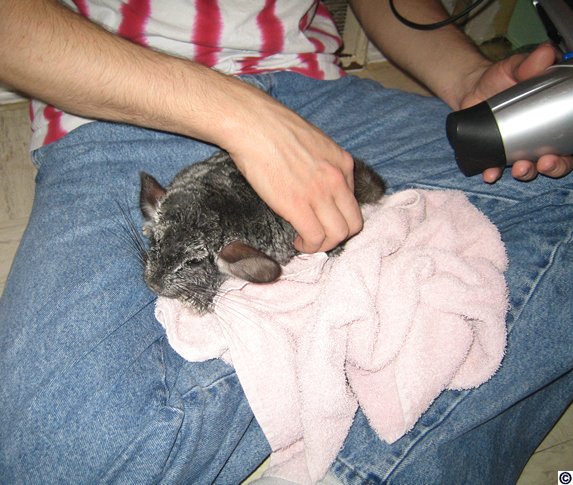
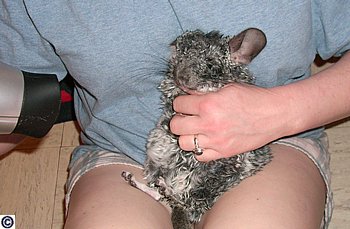
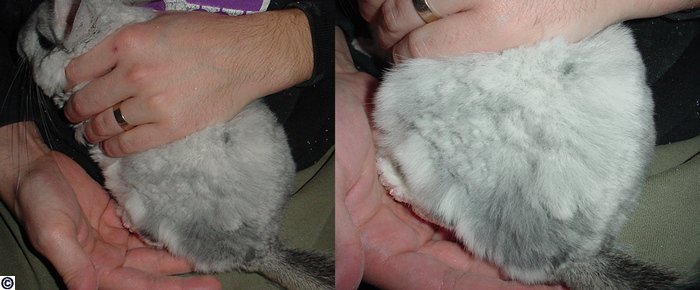
Once you’re comfortable with giving wet baths, one person can finish the drying process by holding the chin on their lap as pictured in photo 1 and photo 2 above. IMPORTANT: When the chin’s ears start to get very red, stop the hairdryer and do a little towel drying for a minute or to in order to allow the chin to cool off before resuming.
When the chin feels and looks completely dry (check right behind the ears and the especially thick fur on his haunches), allow him to use the dust bath you had set aside in the bathroom. Make sure that he gets a few good turns in his bath while still in the warmer air of the bathroom before wrapping him up in your shirt to take him back to his cage, this will help him acclimate to the cooler cage environment.
There should be no fans going, open windows or drafts near the cage, and if you don’t usually keep a sheet around the cages (as described on Routines), it would be wise to do so for at least the first 24 hours after his wet bath.
NOTE: It is VITAL to watch the bathed chin’s reception when he is returned to his cage, sometimes the change in scent or the wish of the bathed chin to be left alone for a while afterward can antagonize even a close cagemate and cause a conflict. Observe the bathed chin’s welcome for at least a half-hour or until it seems there will be no problems. If your chins have been trained by your tone of voice to understand “No” as a deep, serious, negative tone and “Good boy/ girl” as a more high-pitched, light, and positive tone, use commentary to encourage good behavior and discourage bad.
Care Myth: Withholding A Dust Bath
No matter what condition a chin is in at the time, whether pregnant, after birthing, ill, injured, etc., they need a dust bath because keeping clean is not only a physical requirement, it’s also a vital psychological pacifier. A chin that is deprived of a dust bath is more susceptible to stress-related health and behavioral problems.
In the wild, they would not refrain from rolling in their native volcanic ash for any reason, for better or worse. When chins are kept domestically, though, it is good sense for the chinparent to take some extra precautions when administering dust bath to a chin that has a condition (pregnant, after birthing, ill, injured, etc.) that makes them prone to complications (re-injury from rolling, mastitis, infection or vaginal irritation) if they were to roll in dust bath as usual.
The Dust Bath Massage
When your chin can’t take their usual dust bath, they can STILL get clean by you APPLYING the dust bath for them. Simply place the chin on a table or on your lap with a towel to catch excess dust as you apply it, and have a dish of dust bath ready beside you. Dip your fingers into the dust bath and carefully, gently rub it into the chin’s coat, avoiding any affected areas such as bite wounds, an injured limb, the vaginal area of a pregnant or recently littered chin, and the entire underbelly of a nursing chin- to keep the dust from irritating the nursing kit’s eyes.
Baby Cornstarch Powder (no Baby Powder, nothing containing talc!) can be substituted for dust when massaging a nursing chin, just to ensure that no granular particles (dust bath is sometimes more coarse than cornstarch powder) get into the kit’s eyes.
A dust bath massage expedites recovery by calming the distress that a chin feels when he’s messy but can’t roll in the dust bath on his own. A chin that feels clean and comfortable after getting a dust bath massage is more relaxed and better able to cope with his present condition.
Dry Butt-Bath
By Dana Krempels, Ph.D. University of Miami, Biology Department, House Rabbit Society of Miami
Note by ChinCare: Although written for dry-bathing a messy rabbit rear, this will work just as well on a chinchilla.
- Purchase a container of Baby Cornstarch Powder (no Baby Powder, nothing containing talc!) from the grocery store baby section. You can use either unscented or scented cornstarch powder. DO NOT use commercial flea powders or other pesticides on your bunny. Use only baby-safe cornstarch powder for best, safest results.
- Place bunny is a comfortable position so that the soiled parts are easily accessible. This may involve placing him in your lap on a bunched towel so that he feels secure, or simply laying him on the floor in a comfortable position if he’s calm and won’t try to run off.
- Liberally apply the cornstarch to the soiled areas, and gently work the powder down into the fur, around messy poops, and down to the skin.
- Work the powder around any stubborn clumps of debris gently. As the cornstarch coats the mess, it will slide away easily.
- Once the largest bits of mess has been removed, use a soft-tipped brush to gently loosen any remaining dirt and debris.
- Pat the powdered areas well to remove the loose powder.
Related Video: