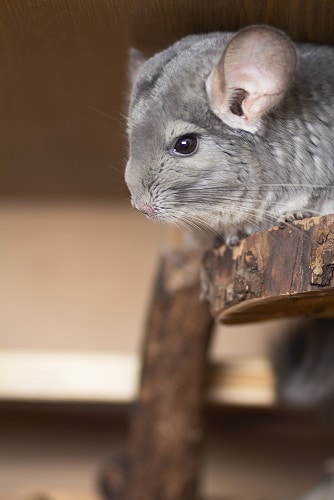
The Dental Health section’s contents are the result of extensive study and research (sources are appropriately credited) into the subjects of rodent and chinchilla dental concerns, malocclusion, calcium metabolism, and bladder stones, as well as how nutrition and domestic husbandry impacts dental health. Since 2001 we’ve conducted vitamin C and calcium supplementing on literally hundreds of chins (via our chinfamily since 1997, rescue work since 2000 and saving ranchies since 2004), many of whom have had moderate to mild calcium deficiency.
Also since 2001, we’ve treated eleven maloccluders with the constant consultation and guidance of our exotics specialist vet. Our input in the articles on malocclusion and vitamin C and calcium supplementing (where other sources are not cited) is based largely on our considerable research and personal experience in those subjects, as well as incorporating the feedback from many others we have advised.
Whenever a chin has internal health issues (pneumonia, digestive, etc.) or dental disease (including malocclusion), it is important to stop all treats of a potentially hazardous (dried fruit with its concentrated sugar, nuts, seeds, etc.) nature until it is certain the chin has fully recovered.
Dental problems may require hand-feeding if the chin is not physically able to feed himself, and hand-feeding means supplying nutritional content, not free-feeding treats.
Calcium deficiency is a cause of environmental malocclusion and malocclusion is NOT always a “death sentence,” it may be reversible in the initial and mid-stages with vitamin C and calcium supplementing among other things. While only calcium deficient or pregnant/ nursing chins need calcium supplementing, EVERY chin should receive vitamin C supplementing because it strengthens the connective tissue around their open-rooted teeth.
Calcium supplementing in chinchillas can be beneficial because chins aren’t like rabbits and guinea pigs, whose atypical calcium metabolism predisposes them to urine sludge and bladder stones. While vitamin C and calcium supplementing can improve some dental problems, they are not being suggested as a miracle cure-all for every type of dental problem. Chins that are NOT calcium deficient, including those who are maloccluded from causes other than calcium deficiency (genetic, accidental, environmental malocclusion from insufficient tooth wear), do not need and may not be helped by calcium supplements.
Be advised that past care, age, general health, and the type and severity of the dental problem, including how long it’s been neglected, will affect how the chin responds to any kind of treatment. As stated in ChinCare’s disclaimer, there is no suggestion, advice, or recommendation on this site that is intended to serve as or substitute for the expert diagnosis and treatment of an exotics specialist vet.
Dental Health
- Abscesses, photos CA Chins
- Dentition of pets, including chinchillas www by bbc.co.uk, also in .doc
- Photo examples of chinchilla skull Animal Diversity Web
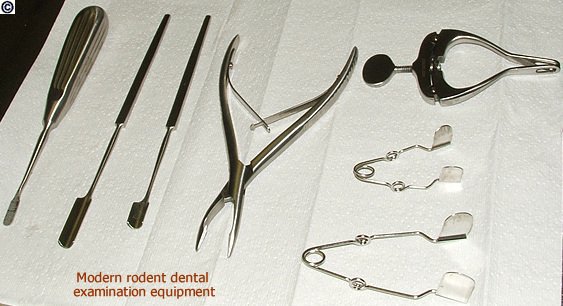
- Photo examples of dental equipment: Parkland Scientific, The Canadian Veterinary Journal
- Small Mammal Dentistry by Heidi L. Hoefer, DVM, ABVP
Dental Facts and Problem Prevention
Chinchillas have 20 teeth in all, including incisors and molars- five on the upper jaw left side, five on the upper jaw right side, five on the lower jaw left side and five on the lower jaw right side: “The dental formula is 1/1 incisors; 0/0 canines; 1/1 premolars; 3/3 molars. The incisors are yellow [actually, dark orange best describes the ideal tooth enamel color] and grow 2-3 inches (5.5-6.5 cm) per year. The oral cavity is small and narrow and largely filled by the tongue.” (ref-Heidi L. Hoefer, DVM, DABVP) Some other animals have the same dental formula as the chinchilla, including old and new world porcupines, capybara, and guinea pigs.
Characteristics of rodent teeth and herbivores
(ref, where quotes are not cited- Rat and Mouse Club of America, Rodent Dentistry(.pdf)
“In herbivores, including many small mammals, the oral cavity has a small oral opening, helpful in keeping the vegetation in the mouth during chewing and grinding. To compensate for the regular attrition of the teeth caused by chewing roughage, the teeth must continue to erupt, in order to maintain a constant height in the mouth… Small herbivores, such as rodents and rabbits, have teeth (with the exception of some rodents’ cheek teeth) that are continuously growing. In other words, there is no true root structure as the apex remains open, producing tooth structure throughout the life of the tooth (aradicular hypsodont-no root, long crown). All rodents also have continually growing incisors, but only the one large maxillary pair, with no peg teeth. Some rodents (chinchillas and guinea pigs) also have continually growing cheek teeth, while others (hamsters, gerbils, mice, and rats) have molars that resemble those of dogs, cats, or even humans (brachyodont).”
(quote– Heidi Lobprise, DVM, Dipl. AVDC, veterinarypracticenews.com)
“Lagomorphs” (the most popular lagomorph pet is the rabbit) and rodents share some similar dental features although there are structural and functional differences. Lagomorphs are distinguishable from rodents in that they have two pairs of upper incisors (the second pair, located immediately behind the larger incisors, are small and peg-shaped, often referred to as the “peg teeth”) and rodents have one pair. Lagomorphs also have more teeth than rodents (specifically, premolars) and their lower jaw (called the “mandible”) is narrower than the upper jaw (called the “maxilla”), while in rodents, the upper jaw is narrower than the lower jaw.” (Dental Anatomy & Care for Rabbits and Rodents-.doc)
“Guinea pigs, chinchillas, and degus have the dental formula of 2 x I 1/1 C 0/0 P 1/1 M 3/3 (where I = incisors, C = canines, P = premolars, and M = molars). The premolars and molars act as a functional unit to grind food and the incisors are used for prehension and cutting of fibrous foodstuffs. All teeth grow continuously. There is no true anatomical root. The lower (mandibular) cheek teeth are arched toward the tongue and overgrowth can lead to tongue entrapment. The upper (maxillary) cheek teeth are angled outward (laterally). Angulation of the teeth provides an effective surface for grinding thin fibrous food material and when eating this high silicate foodstuff, rapid tooth wear occurs and new growing tooth replaces the wear caused by grinding. In the wild these animals spend a long time eating low-quality grasses that are high in silicates (the precursors of glass). This continual grinding prevents overgrowth of the teeth.” (quote- Mark Rowland BVSc cert Zoomed MRCVS)
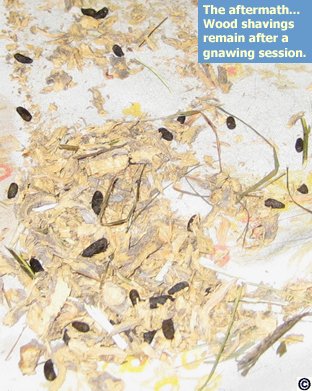
Rodents only have incisor and molar teeth or “cheek teeth,” no canines. The incisors (which gnaw) are separated from the molars (which grind in preparation for consumption) by a large gap called the diastema, and folds of inner cheek extend into this gap and allow the animal to have control over what is merely gnawed (photo below) and expelled, and what is actually swallowed.
“Of the 1700 rodent species, only 5 (springhaas, Patagonian cavy, capybara, chinchilla, guinea pig) have open-rooted systems that result in the continuous growth of all teeth; they are classified as full elodonts.” (see full quote– The Canadian Veterinary Journal)
Rodent incisors are composed of a superficial layer of enamel that consists of iron, calcium, phosphorus, and other mineral salts (.doc). “Enamel is the hardest substance in the body. Underneath the thin layer of enamel is dentin, which is a material very similar to bone. A layer of cementum covers the dentin at the level of the root. Finally, in the interior of the tooth is the pulp, which contains blood vessels and nerves.”
(quote- Rat and Mouse Club of America)
The outer enamel layer is extremely hard and while the dentin inside the enamel is also hard, it is still softer than the enamel. Thus, the enamel protects the incisor and allows for continued wear, which chisels the incisors into their pointed shape because the outer enamel layer stays longer than the dentin inside, which wears more quickly. It is the hardness of the enamel that allows rodents to even gnaw on metal.
Problem Prevention, Ways To Help Ensure Chinchilla Dental Health
“Skulls from wild-caught chinchillas showed minimal evidence of dental disease and the teeth were all short, cheek tooth lengths averaging 5.9 mm. Cheek tooth lengths in zoo specimens (average 6.6 mm), clinically normal (average 7.4 mm), and captive-bred animals with the dental disease (average 10 mm) were significantly elongated by comparison (p < 0.0001). Captive-bred specimens showed a wide range of tooth-related lesions. These results suggest that some aspect of captivity is responsible for the development of dental disease in chinchillas. It is suggested that the diet (its physical form and composition) is the main etiological factor, and that provision of a diet closely matching that of wild chinchillas should significantly reduce the incidence of dental disease in captive chinchillas.”
(quote-Crossley DA, Miguélez MM. Skull size and cheek-tooth length in wild-caught and captive-bred chinchillas. Arch Oral Biol. 2001;46(10):919-928. doi:10.1016/s0003-9969(01)00055-3)
From our research and personal experience with malocclusion, as well from studying how nutrition and domestic husbandry affect dental health in chinchillas, it has also become evident to us that the dental problems of the domestic chinchilla are most often caused by manageable factors in their care environment, namely, tooth wear (affected by gnawing and diet), and whether or not the chin has sufficient calcium levels (affected by the inherited calcium factor and diet).
We advise the following for dental disease problem prevention:
- Provide a simple diet that supplies sufficient calcium. Unlimited access to fresh, high-quality pellets, a variety of hays that include alfalfa hay, and distilled or filtered water (the dietary staples). Pellets provide nutrition but they are “soft food.” Chewing tough, fibrous material for consumption (hay) grinds down continuously growing molars, thus preventing molar overgrowth (spurs, points).
- Limit treats! Fewer treats (or none at all) means more stomach room for good feed and hay, which impacts both tooth wear AND calcium levels. The sugar content in some treats, especially dried fruits, contributes to tooth decay, and the consumption of high phosphorus grains can lead to calcium deficiency (and malocclusion!).
- Provide a variety of safe, effective chew toys of varying hardness, to encourage gnawing interest and to keep continuously growing incisors trimmed, thus preventing incisor overgrowth.
- Supplement vitamin C, EVERY chin can benefit from this because it helps prevent dental disease by strengthening the connective tissue which holds the chin’s open-rooted teeth in place.
- If the chin’s tooth enamel indicates a serious calcium deficiency (clear/ white to light yellow), then moderate Ca:no P calcium supplementing is required only until the deficiency is corrected, until the teeth turn dark orange, which indicates sufficient calcium levels in the body.
- With regard to the inherited calcium factor: Pregnant/nursing chins should always receive both vitamin C and calcium supplementing, their bodies are being depleted by the process of creating and nourishing new life. Supplementing calcium in particular at this critical time can prevent calcium deficiency and malocclusion from occurring in the mother or kits in the future.
Malocclusion, according to Dictionary.com, is defined as: “faulty occlusion; irregular contact of opposing teeth in the upper and lower jaws.” However, common usage in the pet chinchilla community differs from the strict definition of “malocclusion,” focusing more on the condition of tooth overgrowth, either root or crown elongation, in either the incisors or molars, regardless of misalignment but not excluding it.
By strict definition overgrowth in itself is not malocclusion, malocclusion is misalignment. But the two are often inextricably linked, e.g., misalignment can cause overgrowth when the teeth don’t align for proper wear, and tooth root overgrowth can lead to overcrowding and misalignment. Considering that connection and the fact that misalignment without overgrowth isn’t usually a big problem (it’s root overgrowth into the sinus and occular cavities that makes malocclusion fatal), our use of the term, “malocclusion” on this site leans more toward the common use of the word as previously described.
“Molar spurs,” “burrs,” or “points” are all terms that indicate the same thing: overgrowth, or elongation, of the back teeth (molars) at the occlusal surface (crown). Frequently, where there’s crown overgrowth, there’s also root overgrowth. This is why a head x-ray to evaluate the situation is imperative, because sometimes the chin gets lucky and only needs his incisors trimmed or molar spurs clipped and then he’s good to go, other times it’s necessary to implement a treatment plan.
There are three types of malocclusion, which indicate cause:
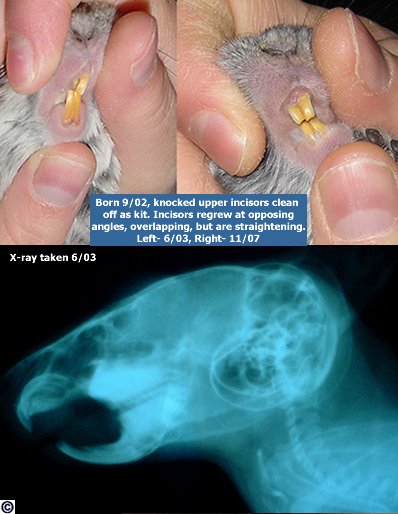
- Accidental malocclusion – e.g., as with a chin who broke his upper incisors clean off)
- Genetic malocclusion – and potentially hereditary, genetic maloccluders should never be bred. We suspect that teeth inclined to twist and hook may indicate genetic predisposition.
- Environmental, or “Acquired” malocclusion – as a result of calcium deficiency (caused by inherited or dietary factors) or insufficient tooth wear (doesn’t have or won’t use chew toys or hay), both of which can cause tooth overgrowth and misalignment.
Malocclusion Articles and Photos
- Dental surgery by Azure Chinchillas: to correct malocclusion(.doc) and in a specific malocclusion case(.doc)
- Malocclusion, genetics: Chinchillas.com
- The Canadian Veterinary Journal
- Molar spurs and points: CA Chins (photos)
- Photos of maloccluded skulls: Chinchillas4Life

Chinchilla before and after treatment (Sasha’s Miracle) 
Chinchilla x-ray showing malocclusion (ChinCare) 
Chinchilla x-ray showing normal teeth (Chinchillas2Home) 
Chinchilla mouth one month later (Nippon Chinchilla Rescue) 
Extracted left mandibular (lower) incisor of chinchilla 
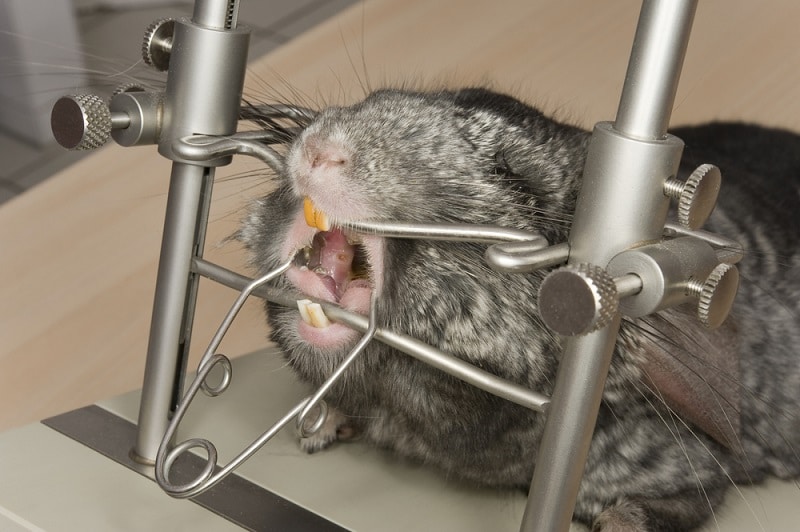
Chinchilla undergo molar spur exam 
Chinchilla weight loss due to inability to eat, note that head is disproportionately larger than body and drooling wiped on side has resulted in matted fur 
Chinchilla soiled paws and fur pawed away under – signs of malocclusion 
Chinchilla drooling and wet front (photo 1) 
Chinchilla drooling and wet front (photo 2) 
Serious cases of chinchilla malocclusion (photo 1) 
Serious cases of chinchilla malocclusion (photo 2)
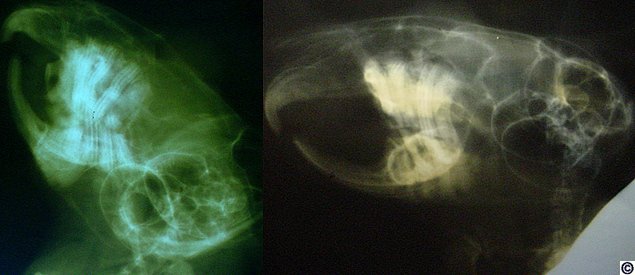
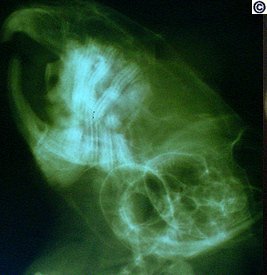
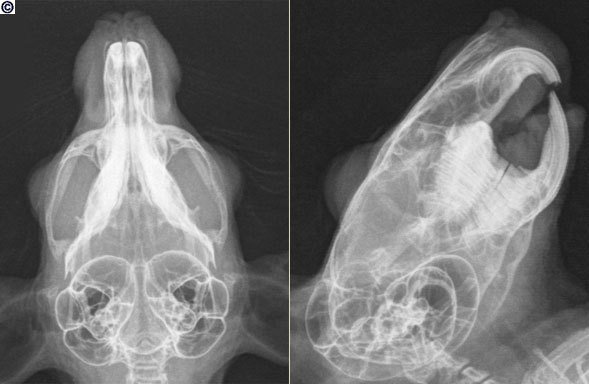
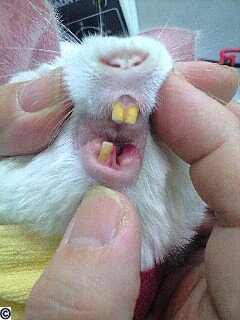
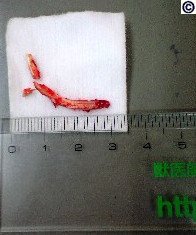
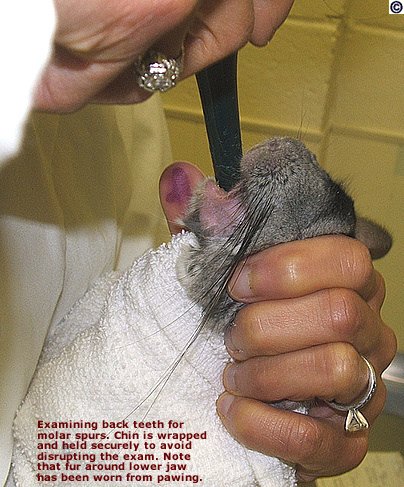
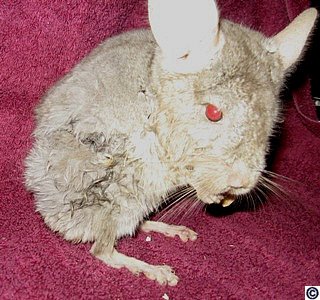
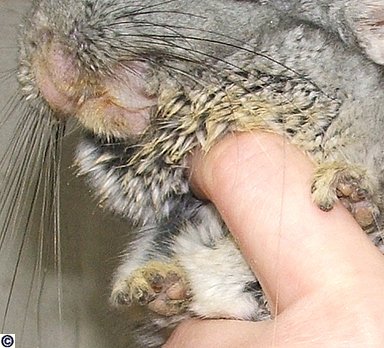
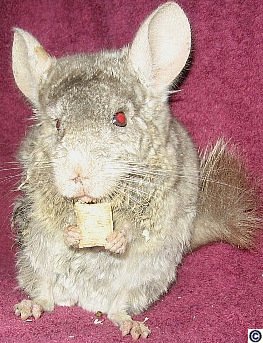
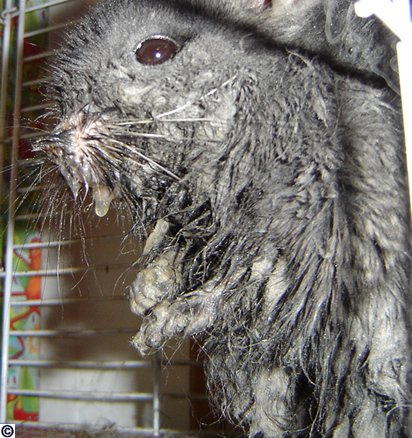
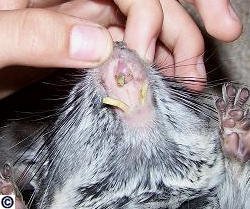
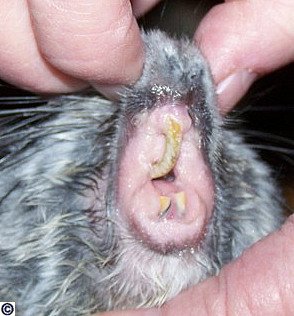
By Dr. Keffer, Chin~Vet
Chinchillas are hypsodonts, meaning that they have continuously growing incisors and molars. If the teeth are not properly worn down by constant chewing of coarse material, they can overgrow. Instead of growing out of the mouth as we see with some rabbits and guinea pigs, the teeth actually reverse their direction and will grow from the roots. This means that you may not see the signs of tooth overgrowth until it is too late. The roots will grow up into the facial sinuses and even into the orbit (eye socket). Clinical signs such as runny eyes and protrusion of the eye will occur.
Dental Surgery to Correct Malocclusion by Azure Chinchillas (doc)
After a lengthy conversation with the vet (who is an acknowledged “exotics” expert) — that one of my chinchillas has been referred to for specialized dental work – I was told the following — which I think may be of interest. He explained that dental overgrowth (malocclusion) — as we all know — affects the grinding surfaces of the teeth, causing them to over-grow, misalign and form spurs and sharp edges that cause the chinchilla much discomfort and difficulty eating. This can affect any teeth, incisors, premolars, and molars.
The usual treatment for the affected grinding surfaces is to have them filed or clipped down whilst the chinchilla is under anesthetic. However, malocclusion can also affect the roots of the teeth too (this shows up well on X-rays). With the upper teeth — they over-grow upwards into the skull and towards the eye orbits – firstly occluding the lachrymal ducts and causing weepy eyes. With the lower teeth, they can over-grow downwards, into, and out of, the lower jaw. The lower tooth roots grow much faster than the upper ones. Understandably this root elongation causes the chinchilla to suffer from chronic “jaw-ache” which may prevent the chinchilla from fully recovering, even though they may have had surgery to correct the grinding surfaces.
Clinical Approach to the Chinchilla by Heidi L. Hoefer, DVM, DABVP
Improper dental wear can result in overgrown teeth and sharp edges in both the incisors and cheek teeth. Clinical signs include weight loss, inappetence or anorexia, and drooling or “slobbers.” Some chinchillas present with increased lacrimation (eye tearing) on the affected side.
Diagnosis is based on clinical signs and a thorough oral examination. An otoscope with a light source can be used to check the cheek teeth. Human nasal speculums are available with a light source that attaches to the otoscope handle for easier observation of the cheek teeth (Welch-Allyn bivalve nasal speculum #26030). Sedation may be needed to fully examine the cheek teeth. Skull radiographs are important to examine the occlusal (crown) surfaces as well as the roots.
Tooth root elongation and crown extension is a problem seen in some chinchillas on a low roughage diet. Pellets, grains, and most vegetation do not provide adequate chewing to wear down the cheek teeth properly and crown and root extension can occur. The roots form palpable “bumps” on the mandible and are readily seen on radiographs. Oral examination may show a somewhat normal occlusal surface and lack of points or ulcerations, although points can occur.
Treatment involves trimming of the sharp edges or overgrown teeth. A small bone rongeur (Lempert) or drill (dental or Dremel) can be used to file points. Tall crowns need to be burred down to the gum line and may be repeated every 6-8 weeks. Antibiotics are indicated for root abscesses and carries a very guarded prognosis for full return to function.
Owners should be aware of the likelihood of recurrence, the need for regular dental care, and the long term poor prognosis. This condition is irreversible and may result in chronic weight loss and painful mastications. These individuals are usually on syringe feedings indefinitely, which exacerbates the lack of wear on the crowns. Euthanasia is often recommended for these chronically painful individuals.
Malocclusion: The Environmental Factor
Both calcium deficiency (caused by inherited or dietary factors) and insufficient tooth wear (doesn’t have or won’t use chew toys or hay) can cause tooth overgrowth and misalignment. This is environmental malocclusion, the most common type of malocclusion, demonstrated by the fact that wild chinchillas do not suffer from the captive chinchilla’s high incidence of dental disease, which includes malocclusion. Environmental malocclusion is entirely a consequence of domestic husbandry, or how the chin has been or is presently being cared for. This means that the potential exists to successfully prevent or treat this type of malocclusion. What we refer to as environmental malocclusion, to be more illuminating for our readers, is actually referred to by vets as, “acquired malocclusion.”
If your chin doesn’t gnaw, won’t eat hay, or has light-colored teeth that indicate calcium deficiency, he is at serious risk for malocclusion! Read this section for important details.
Environmental Malocclusion: Calcium Deficiency
Although kits are born with white teeth, their tooth enamel darkens during the weaning period of 8-10 weeks and by the time they’re a few months old, it should be a healthy dark orange, which indicates sufficient calcium levels in the body. Some kit’s teeth may darken more slowly, the mother’s calcium supply during pregnancy and nursing directly affects what the kit has to start out with in life.
This is why pregnant/nursing chins should always receive both vitamin C and calcium supplementing, their bodies are being depleted by the process of creating and nourishing new life. Supplementing calcium in particular at this critical time can prevent calcium deficiency and malocclusion from occurring in the mother or kits in the future. Kits should never be supplemented directly unless vet advised, they’ll get what they need through their mother’s milk in a form and concentration that their digestive system can handle.
The pigmentation of rodent tooth enamel actually reflects the presence of iron in the enamel, it’s the iron that gives the teeth their ideal dark orange coloring. The degree to which iron colors the enamel, however, is directly influenced by the calcium (and phosphorus) levels in the body, read more about tooth enamel in this document. The crux of this relationship between calcium and tooth enamel coloration, though, is this: the lighter the tooth enamel, the more severe the calcium deficiency. Clear teeth are the worst off, and white teeth (sometimes brittle-looking) also indicate a very serious calcium deficiency. Light yellow teeth are still seriously deficient, then shades of yellow from medium to dark indicate calcium levels improving. Once dark orange tooth enamel is achieved, manifesting the proper rodent tooth enamel color, this signifies sufficient calcium levels in the body.
Be aware that a chipped tooth can cause loss of enamel, it will appear white in the spot where the colored outer enamel is gone and the dentin layer beneath is exposed, and this should not be mistaken for calcium deficiency. Also, it is very important to check tooth enamel occasionally, every 2-3 weeks to ensure that calcium levels are still good because it can fluctuate and many bodily functions (heart, nerves, muscles, etc.) are dependent on good blood calcium while bones, the body’s calcium reserve, need it to remain strong and healthy. Tooth enamel color can sometimes change rapidly, so don’t overreact if your chin’s teeth temporarily get lighter. Just discontinue any dietary extras that are high in phosphorus (nuts, seeds, grains) and offer some additional calcium by providing more alfalfa hay, which is high in calcium, or sources such as calcium chews. The calcium supplementing article explains calcium metabolism in mammals in greater depth and its articles section contains additional information.
What doesn’t seem to have yet been recognized, however, is the connection between calcium deficiency and malocclusion, how teeth that are clear/ white to light yellow, indicating a serious calcium deficiency, tend to overgrow (incisors, molars or both, at roots, crowns or both) and malocclude.
One possible allusion to this connection, however, is in The Merck Veterinary Manual, which states, “Tooth abnormalities are common in chinchillas and may be observed by the time they are 6 mo old. Malocclusion caused by a nutritional mineral imbalance may also be noted in primiparous females.” (ref– merckvetmanual.com) In rabbits, the connection between calcium deficiency and dental disease has been noted: “Metabolic bone disease is a condition seen in almost all house rabbits with dental disease. This disease is similar to osteoporosis in humans where there is a lack of calcium in all bones.”
We began both vitamin C and calcium supplementing in 2001 when we’d been chinparents for just four years. The vitamin C supplementing we undertook because we’d read somewhere online that chinchillas like chewable vitamin C tablets, and we wanted to provide a treat that had positive health benefits. Then, again through some online browsing, we learned that the light color of one of our chin’s teeth, Sasha, indicated a serious calcium deficiency, so we started calcium supplementing. At the time we never expected the vitamin C and calcium supplements to positively affect her advancing malocclusion (by straightening and reversing the tooth overgrowth), but it did, and it’s done the same for many other chins in cases that we’ve both treated and advised on.
We’ve watched this cause-effect relationship between calcium deficiency and tooth overgrowth/ malocclusion borne out repeatedly in the years that we’ve done rescue work (since 2000, but we started supplementing in 2001) and seen hundreds of chins, many with moderate to mild calcium deficiency. Since we give those chins (vitamin C and) calcium supplementing immediately, their teeth don’t overgrow, their enamel becomes dark orange and the problem never advances from there.
But when chins arrive at our rescue with light-colored teeth (clear/white to light yellow), indicating a serious calcium deficiency, they’re the ones who typically have elongated incisors or palpable bumps under the mandible (molar root elongation going right through the lower jaw), indicating the onset of malocclusion. Light-colored teeth (serious calcium deficiency), are sometimes the first visible indication that malocclusion has already begun, which at the earliest stage can only be confirmed by viewing the tooth roots via head x-ray. Of the eleven maloccluders that we’ve worked with since 2001, most had serious calcium deficiency accompanied by tooth overgrowth, which we put into remission using vitamin C and calcium supplementing. We have routinely observed in both our and other’s experiences that once calcium deficiency is corrected it can stop or even reverse tooth overgrowth and malocclusion.
The problems with diet and meeting calcium needs
In the wild, in the Andes mountains of South America, chinchillas are able to get enough calcium from their native diet to combat calcium deficiency because they’re eating the plants that grow in their natural environment, the ones best suited to satisfy their nutritional needs. They also don’t receive dietary extras (supplements, treats) that could potentially interfere with and adversely affect the balance of their calcium:phosphorus (Ca:P) ratio.
The plants that comprise the chinchilla’s native diet have of course not made the transition with them into captivity, and to date, there have been no scientific studies that would indicate what the chinchilla’s actual calcium requirements are OR what constitutes a nutritionally complete and balanced chinchilla diet. And even if such data were available, today the domestic chinchilla’s basic diet, consisting of the dietary staples of pellets and hay, varies significantly by critical factors that affect both its calcium and nutritional content, for example:
Ingredients/ Analysis: Pellet content and analysis vary by country of origin as well as by brand. Hay types carry different Ca:P ratios, like alfalfa which is much higher in calcium than grass hays and grain hays which usually have an inverse Ca:P ratio (more phosphorus than calcium, this can be problematic).
Quality: Calcium content and the nutritional value of hays is dependent on many factors associated with its cultivation and harvesting, and both hay and pellets have a shelf life.
To further complicate matters, in some cases domestic chinchillas are fed completely inappropriate diets intended for other animals (birds, gerbils, etc.), and others are fed little to none of the dietary staples of pellets and hay, in lieu of being supplied with excessive amounts of nuts, seeds, fruits, vegetables, grains, and cereals- potential health hazards that can be very high in phosphorus and which often have an inverted Ca:P ratio (more phosphorus than calcium), factors which cause calcium deficiency. The calcium supplementing article explains the Ca:P relationship and calcium metabolism in mammals in greater depth.
Providing “supplemental” grains mixes and giving fruit (especially dried fruit) as treats are popular, widespread practices in the pet chinchilla community and that’s not entirely bad or harmful, we aren’t condemning that here. But grains (barley, wheat germ, bran, oats, wheat, etc. in the form of grain hays, supplemental grain mixes, grain treats, cereal or uncooked pasta, etc.) are very high in phosphorus, as are many fruits, and either is very likely to have an inverse Ca:P ratio (as in the case of raisins, whose Ca:P ratio is 0.5:1 (document) which concludes that, if fed in substantial enough amounts, the excess phosphorus from these dietary extras can adversely affect a chin’s Ca:P ratio and result in calcium deficiency (and malocclusion). When additional calcium is provided by way of alfalfa hay, which is high in calcium, or calcium from sources such as calcium chews, this helps offset the risk of calcium deficiency.
The best information we have today on chinchilla nutrition derives from the study of what chinchillas eat in the wild and the insight of veterinarians. When chinchillas are fed unlimited amounts of fresh, high-quality pellets and a variety of hays, when they’re given treats very sparingly with an emphasis on what is healthier, when they’re supplemented with vitamin C and given calcium supplementing only when pregnant/ nursing or if they become calcium deficient, then this basic approach to diet and nutrition is, in our opinion which comes as a result of considerable experience and research, the best course of action to pursue optimum health.
Besides poor diet, calcium deficiency can also result from an inherited calcium deficiency
By “inherited calcium deficiency,” we don’t mean “inherited” in the genetic or hereditary sense, but rather, in the way of transference: a pregnant/ nursing chin who has compromised calcium levels will have less calcium to spare for the process of creating and nurturing new life, thus making her offspring calcium deficient as well (and herself even more deficient).
Inherited calcium deficiency, then, is an ENVIRONMENTALLY CAUSED process, although it can APPEAR genetic and hereditary simply because the deficiency gets passed down the family line from one generation to the next. In reality, of course, it’s just a matter of depleted resources (calcium) becoming more depleted as they get thinned out in the ensuing generations, and unless the deficiency is corrected at some point with calcium supplementing, malocclusion will eventually result.
It is commonly recognized in other species that the demands placed on the body for the purpose of reproduction require some dietary enrichment to ensure optimum health in both mother and offspring, and the inherited calcium deficiency factor is precisely why pregnant/ nursing chins should always receive both vitamin C and calcium supplementing. Moderate amounts of additional protein and vitamins/ minerals are also recommended for pregnant/ nursing or poorly chins (underweight, malnourished, ailing).
When a kit with an inherited calcium deficiency is weaned and goes to a good home where he receives a diet with sufficient calcium, this alone may not be enough to overcome the deficiency he started out with. In some cases of moderate to mild calcium deficiency, however, an improved diet alone is enough to correct the deficiency, and for that reason, it is reasonable to give a new chin a few months on a better diet to see if his calcium deficiency will correct itself. But when the deficiency is more severe (as indicated by clear/ white to light yellow tooth enamel color), then vitamin C and calcium supplements should be initiated.
The phenomenon of inherited calcium deficiency explains why calcium supplementing is sometimes necessary for chins that are presently on a good diet, because the deficiency they started out with in life, as kits before being adopted, is too great to be overcome by improved diet alone. Inherited calcium deficiency also explains why some chins coming from a bad situation where they were fed a poor diet can still have dark orange teeth because they began life with good calcium levels that carried them through the hard times.
Environmental Malocclusion: Insufficient Tooth Wear
Insufficient tooth wear can affect the incisors, the molars, or both, and the resulting tooth overgrowth can involve tooth roots, crowns or both, just as with calcium deficiency. In their native environment, nature provides the wild chinchilla with unlimited access to an enormous variety of gnawing material, and gnawing is what keeps continuously growing incisors trimmed, preventing incisor overgrowth. In captivity, chinchillas must be provided with a constant supply of a variety (to encourage gnawing interest) of safe and effective (hard enough to file bone) chew toys to achieve sufficient incisor wear.
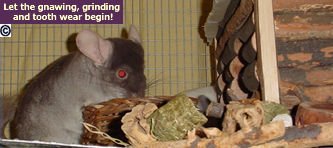
Besides chew toys, diet is also a factor in maintaining tooth wear. The wild chinchilla’s diet consists of vegetation that is woody, stalky, with a tough-to-chew consistency and in addition to that, this vegetation is nutrient and energy-poor, requiring the chinchilla to consume large quantities to extract nourishment. By chewing and grinding large quantities of fibrous roughage on a continual basis, the wild chinchilla effectively files down his continuously growing molars, thus preventing molar overgrowth (spurs, points).
In captivity, chinchillas consume a processed pellet, which along with the occasional supplement or treat makes up a largely “soft food” dietary intake UNLESS the chin is given unlimited access to course, high-fiber hay. Hay not only directly impacts digestive health, but it is also critical for good tooth wear, making hay the “saving grace” of domestic chinchillas. The consistency of hay is the domesticated approximation of the “bark and woody stems of shrubs” because it necessitates the extra grinding by the molars in preparation for consumption. We advise providing a variety of hays to encourage your chin’s interest in consuming while supplying him with greater nutritional benefit.
Side note: If you live in the UK, pellets there are often high in protein and lower in fiber, the reverse of what chinchilla pellets should be according to vets. If a chin isn’t consuming large amounts of hay to compensate for that lack of fiber and to provide roughage for sufficient tooth wear, then dental disease, including tooth overgrowth, can result. Chinchillas4Life has had some success in feeding vegetables to counteract dental disease caused by low fiber/ low roughage diets, and we call attention to that here because we want to make our site readers aware of all their options, even though we urge caution when considering that approach. Ideally, as long as a chin is able to consume hay, then finding the right quality of hay that he will eat regularly should be regarded as the better alternative.
Implementing Environmental Changes To Address Calcium Deficiency And Malocclusion
The only way to determine whether a case of malocclusion may be genetic as opposed to environmental (you’d probably know if it was accidental) is to have a detailed pedigree that includes the chinchilla’s family medical history, and although that may be misleading by virtue of the inherited calcium deficiency factor, it’s still the only real indication that the problem may be genetic. But most chinparents don’t have that information (pet breeders must), and as noted previously, environmental malocclusion is the most common (and therefore most likely) type/ cause of malocclusion.
Since environmental malocclusion is entirely a consequence of domestic husbandry, or how the chin has been or is presently being cared for, this means that the potential exists to successfully treat this type of malocclusion by implementing environmental changes. It is ALWAYS best to assume when a chin is suffering from insufficient tooth wear, calcium deficiency, or is in the initial or mid-stages of malocclusion (i.e., when the condition isn’t fatally advanced per head x-ray), that the problem may be environmental and therefore may respond to treatment.
Be advised that past care, age, general health, and the type and severity of the dental problem, including how long it’s been neglected, will affect how the chin responds to any kind of treatment. For instance, it is much easier to correct calcium deficiency before malocclusion develops. In any case, we owe it to our pet chinchillas to give them every opportunity to benefit from treatment, to overcome their dental problems and survive into old age:
- Go to your exotics specialist vet and get a head x-ray! At the earliest stage of malocclusion, there are NO externally manifest symptoms, but a serious calcium deficiency can be an indication that malocclusion has begun.
- Provide a greater variety (to encourage gnawing interest) of safe, effective chew toys to keep continuously growing incisors trimmed and offer a greater variety (to encourage consumption) and constant supply, of course, high-fiber hay that will grind down continuously growing molars.
- Supplement vitamin C, EVERY chin can benefit from this because it helps prevent dental disease by strengthening the connective tissue which holds the chin’s open-rooted teeth in place.
- NOTE: To get the full benefit of vitamin C and calcium supplementing for a chin with the dental disease- Only provide the dietary staples of pellets, distilled or filtered water, and offer alfalfa hay, with the option of offering some vitamins/ minerals, some extra protein, or herbs in moderation.
- Do not give the chin ANYTHING else. No potential health hazards (yellow and red arrows, see A Guide to Dietary Extras) like nuts, seeds, or dried fruits with their fat, oils, or concentrated sugar that contributes to tooth decay.
- It is VERY important to discontinue ALL grains (barley, wheat germ, bran, oats, wheat, etc. in the form of grain hays, supplemental grain mixes, grain treats, cereal or uncooked pasta, etc.) because the high phosphorus content of grains (.doc) raises phosphorus levels and that will interfere with the effectiveness of calcium supplementing (ref).
- If the chin is unable to feed himself for a time due to the pain of his condition (e.g., initial or mid-stage malocclusion), then a vet-prescribed pain medication (this is very important, to give relief from the suffering so the chin can regain his strength and overcome) and hand-feeding should be administered until his condition improves enough for him to eat on his own again. The purpose of hand-feeding is to supply nutritional content, it does NOT involve free-feeding treats, see Handfeeding and Formulas. Vitamin C and calcium supplements can be added to the hand-feeding formula if the chin is unable to consume his pellets and hay.
- When there is drooling (mid-stage malocclusion), difficulty using the water bottle or hand-feeding mess, it is VITAL that the chin is kept clean, this directly affects their mental attitude; when a chin can’t keep clean he easily succumbs to a negative, hopeless outlook that can literally hasten his demise. Just wipe him down using a warm, damp cloth in a draft-free room and then gently blow dry or towel dry him completely before giving ample dust bath.
- When a chin is significantly underweight (mid-stage malocclusion) or severely fur-bitten (from stress caused by his condition), he is more vulnerable to cold and drafts; getting chilled lowers the body’s resistance to sickness. Put a sheet around his cage and provide some cloth (a baby blanket of fleece in his house, a hammock, Cuddl-E-Cup with strap cut off, Comf-E-Cube, Chilla Pilla with The Day Bed) in his cage so that he can retain body heat, it’s also a comforting convenience. In cold weather climates, it may also be advisable to provide a heated bed (such as Lectro Small Animal Heated Pad), which can be placed inside a pillowcase for the chin to sit on and stay warm. We’ve noted that chins with significant weight loss or fur loss are attracted to heater vents during playtime, this is due to loss of body heat. As long as the chin is able to move off the heated bed at will, there is no danger of him overheating himself.
- Get dental treatment from your exotics specialist vet as needed: incisor trimming, molar spurs clipped, dental surgery, etc.
Symptom Progression of Malocclusion
While incisor elongation can be readily observed without veterinary equipment, just by pulling the gums back a little, molar spurs are at the back of the mouth (WAY back, on the other side of the diastema) and their inspection requires the use of a veterinary otoscope. Molar spurs are protrusions from the occlusal surface (crown) that can be pointed or growing at an angle toward the inner cheek. If allowed unchecked overgrowth, incisors will grow in a curved and tusk-like fashion, eventually piercing the sides or roof of the mouth, and molars will likewise overgrow until they eventually pierce the inner cheek. Molar root elongation, going right through the lower jaw, can sometimes be felt protruding from the mandible or lower jawbone, but it takes an experienced touch to know what’s “normal” and what isn’t.
All symptoms are NOT equal! They are ordered here to show that malocclusion is a progressive problem that occurs IN STAGES.
Calcium deficiency is a cause of environmental malocclusion and malocclusion is NOT always a “death sentence,” it may be reversible in the initial and mid-stages with vitamin C and calcium supplementing among other things. If you think you see one of the final symptoms of malocclusion, like watery or discharging eyes and there have been no preceding symptoms, then you may not be dealing with a case of malocclusion at all, your chin may simply have eye irritation.
The FIRST thing you should do if you suspect a case of malocclusion is to GET A HEAD X-RAY! And don’t wait for your exotics specialist vet to suggest one!
It often happens that they don’t think to mention it and a head x-ray is the ONLY WAY to be certain that malocclusion is indeed what you’re dealing with (as opposed to a dental disease of some other kind) and to discover how far it has progressed and whether the chin may benefit from immediate treatment or require euthanasia. For instance, it’s not uncommon for a vet to treat the immediate and obvious, like clipping incisor overgrowth or a molar spur when if he’d just done a head x-ray and seen that the chin’s malocclusion had already advanced to the point where euthanasia was required, it could have spared both the chin and the chinparent a lot of agony and expense. DON’T resign yourself and your chin to certain doom if you suspect malocclusion, DO get a head x-ray to know how to proceed in the best interests of your beloved chin.
1. Initial Symptoms Include:
At the earliest stage, there are NO externally manifest symptoms, although a serious calcium deficiency can be an indication that malocclusion has begun, and only a head x-ray will be able to detect if the tooth roots are just beginning to overgrow or become crooked (misaligned). This is why it’s a very good idea to get a yearly check-up head x-ray BEFORE symptoms begin and the problem becomes more difficult to manage.
When initial symptoms become evident they include: Disinterest in or has altogether stopped gnawing chew toys, leaves crumbled pellets, eats less hay (pellets are soft food, hay requires more biting and grinding effort), pawing at the mouth, appearing to gag during eating (usually indicates molar spurs), difficulty using the water bottle that results in a wet front, tooth elongation of crown in either the incisors or back teeth (molar spurs), incisors with clear/ white or light yellow tooth enamel (indicating a serious calcium deficiency).
Another reason to get a head x-ray immediately is to have a reference point for follow-up head x-rays, to determine if treatment was effective. If the chin is only in the initial stage, chances are quite good that after implementing environmental changes and an incisor trim or molar clipping (sometimes a few), he’ll be on the road to recovery.
Molar spurs, in particular, are often not a problem at all once the spurs have been removed and, in the case of the spurs gouging the insides of the mouth, once the mouth has had a chance to heal. The key to keeping molar crown overgrowth in check is to ensure the chin is regularly consuming hay.
Be aware that a chin who has adapted to his dental condition (such as molar spurs) may take a little while to readjust to eating and drinking normally after his condition has been corrected. Because whereas he had to overcompensate for the problem before, once the problem is removed he must relearn how to drink without the former complication. It may take a couple weeks to readjust and in the meantime what appears to be “drooling” may in fact be “dribbling.”
If the chin’s teeth (or the insides of his mouth, gouged by molar spurs) are a bit sore after his overgrowth is removed, he may benefit from some hand-feeding or supplementing for a few days following his vet visit. If it is probable that he is experiencing significant pain, be sure to get a vet-prescribed pain medication so that he can function better and regain his strength, this will help his condition improve. Always keep the dietary staples of fresh, high-quality pellets, hay (it may be helpful to crumble hay from an alfalfa hay cube into a dish for easier consumption) and distilled or filtered water available because as soon as a maloccluder is able to eat on his own again, he should be encouraged to do so in order to get tooth wear and prevent more overgrowth and malocclusion.
2. Mid To Advanced Symptoms Include:
Inability to eat normally, resulting in insufficient food intake and weight loss, pain when eating which may be evidenced by pawing at the mouth until the fur is worn away from paws and chin, possessiveness of food dish, highly selective feeding (prefers soft food like herbs and grains to pellets), pulling head to one side while painfully extending lower jaw and repeatedly pawing at it, will not gnaw chew toys and eats little to no hay, hunched painfully or huddling with cagemates for warmth (due to loss of weight and body fat), small fecal droppings (from inadequate food intake or selective feeding), some whitish discharge around eyes (stress reaction), damp and soiled paws, mouth or chest from drooling or “slobbers” (drool and soiled fur may smell, chins may also drool from other dental diseases that are not malocclusion) and desperate, often futile attempts to eat. Molar root elongation in the lower jaw may be present, and although it takes an experienced touch to know what’s “normal” and what isn’t, the overgrowth is evident by small, spikey bumps along the very back of the jawline.
In middle to advanced stage, the malocclusion is causing pain and interfering with the chin’s quality of life, his ability to eat, gnaw, and behave normally. Hand-feeding for a time may be necessary and vet-prescribed pain medication is a MUST if the chin is going to persevere and overcome in spite of the pain. The chin must be kept clean and free of cold and drafts. A head x-ray at this point will determine whether there’s still a chance for treatment or if the final symptoms are present and euthanasia is the only merciful option.
Malocclusion at this stage CAN still be reversible. What determines whether malocclusion requires euthanasia is how far the roots of the teeth in the UPPER jaw have progressed toward the ocular or sinus cavities. Until then, environmental changes can still be effective and should be implemented to give the chin every chance of recovery.
3. Final Symptoms Are:
A very distinct, palpable protrusion under the lower jaw indicates that molar roots have extended considerably past the jawline, watery, or discharging eyes or nose that indicates that the roots of the teeth in the upper jaw have overgrown right into the ocular or sinus cavities.
Please note that MOST of the time when a chin has only watery or discharging eyes, without the other preceding symptoms of malocclusion, that he’s merely experiencing an eye irritation. Also, it is common for chins to wipe their nose to clear dust from it and this is of course not malocclusion-related.
Once root overgrowth in the UPPER jaw has progressed into the ocular and sinus cavities, there is nothing more that can be done to treat or relieve the suffering and euthanasia prevents the chin from lingering in horrible pain, suffering and hunger until imminent death. But there is no way to be CERTAIN of anything without a head x-ray! Even the root overgrowth in the mandible (lower jaw) doesn’t bode the same problems that occur when the tooth roots in the upper jaw are invading the sinus and ocular cavities, although overgrowth in the mandible is usually an indication that the upper jaw roots have also extended considerably. A case of malocclusion may be terminal if the root overgrowth in the mandible is considerable, causes complications such as Osteomyelitis, and does not respond to treatment.
Related Video: